Parameter
Potential Technology
H₂S
Liquid Phase Infrared / Raman, TDLAS / UV H₂S
CO₂ (in solution)
Liquid Phase Infrared / Raman
CO₂
NDIR, Gas Chromatograph / TDLAS
Foaming Agents , Solids
Optical Particle Counter / Oil-in-Water
CH₄
Gas Chromatograph / TDLAS
H₂S (trace)
TDLAS
pH
Online H₂S Analyzer + pH Meter
Amine Strength, Amine Concentration, pH, H₂O
Refractive Index, Conductivity, Density Meter
Parameter
H₂S
Mercaptans
Potential Technology
Liquid Phase Infrared / Raman
Parameter
Foaming Agents
Solids
Potential Technology
Optical Particle Counter / Oil-in-Water
Parameter
H₂S
CO₂
CH₄
Potential Technology
TDLAS
Gas Chromatograph / TDLAS
Parameter
Amine Strength
Amine Concentration
pH
H₂O
Potential Technology
Refractive Index, Conductivity, Density Meter
Description
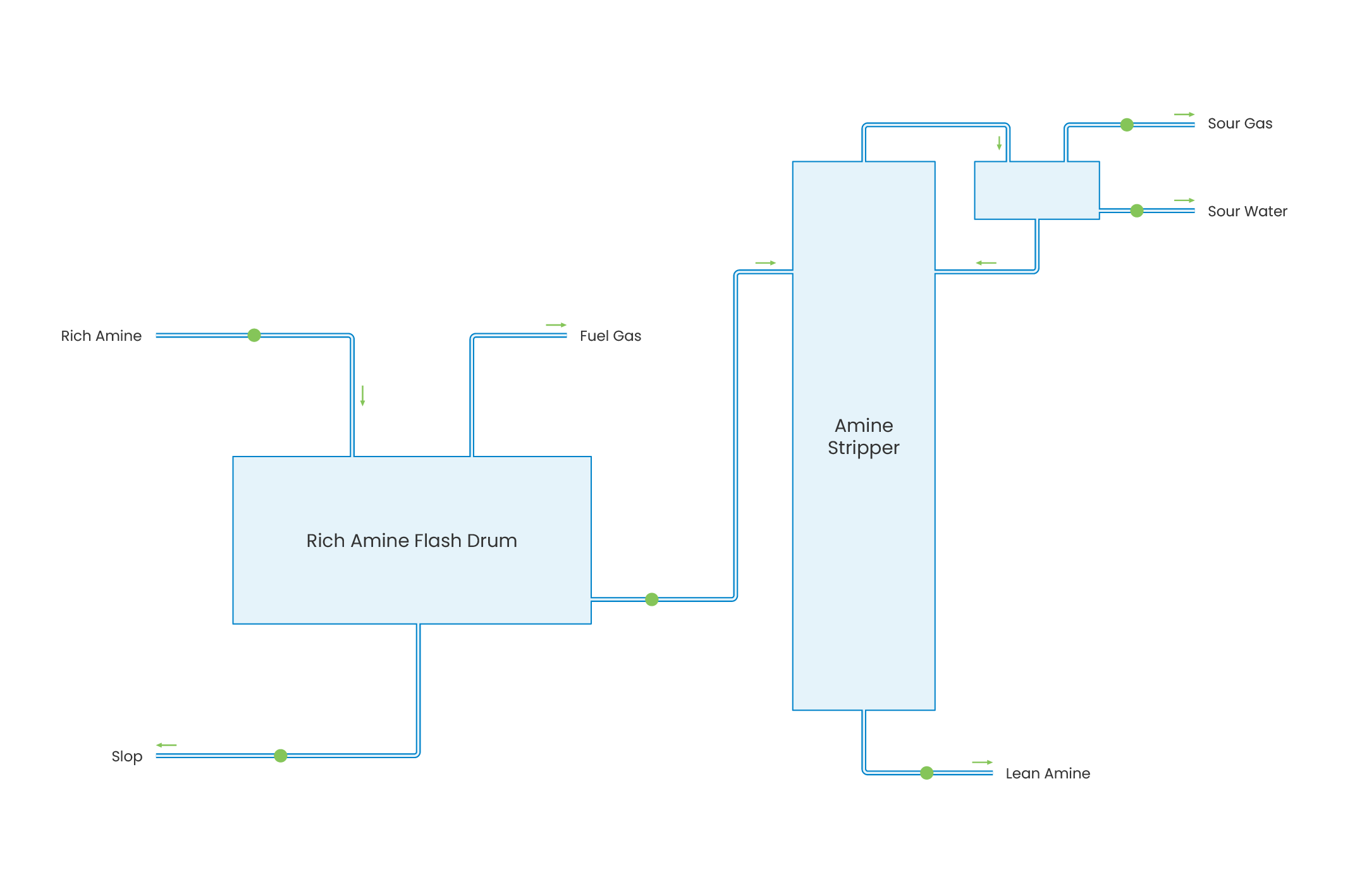
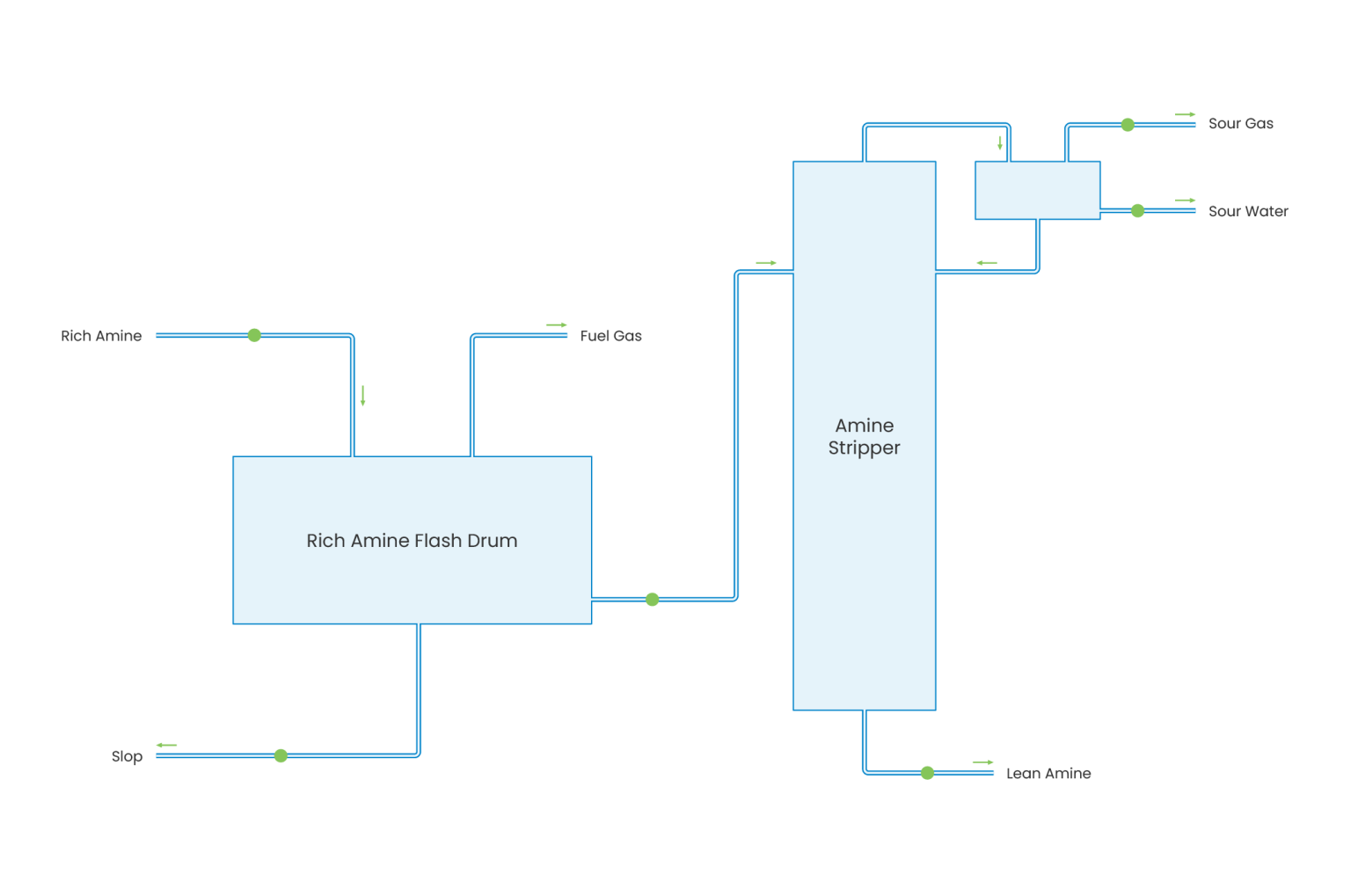
Fuel gases from various operations in a refinery contain hydrogen sulphide (H2S). If this were burned directly, sulphur dioxide would be formed in concentrations well above international guidelines. The H2S is therefore typically removed by absorption in the liquid phase with a regenerable solvent. Commonly used absorbents are alkanolamines such as Monoethanolamine (MEA), Diethanolamine (DEA), or Methyldiethanolamine (MDEA). Amine regeneration is achieved through steam stripping with sour gas being routed to the Sulphur Recovery section.