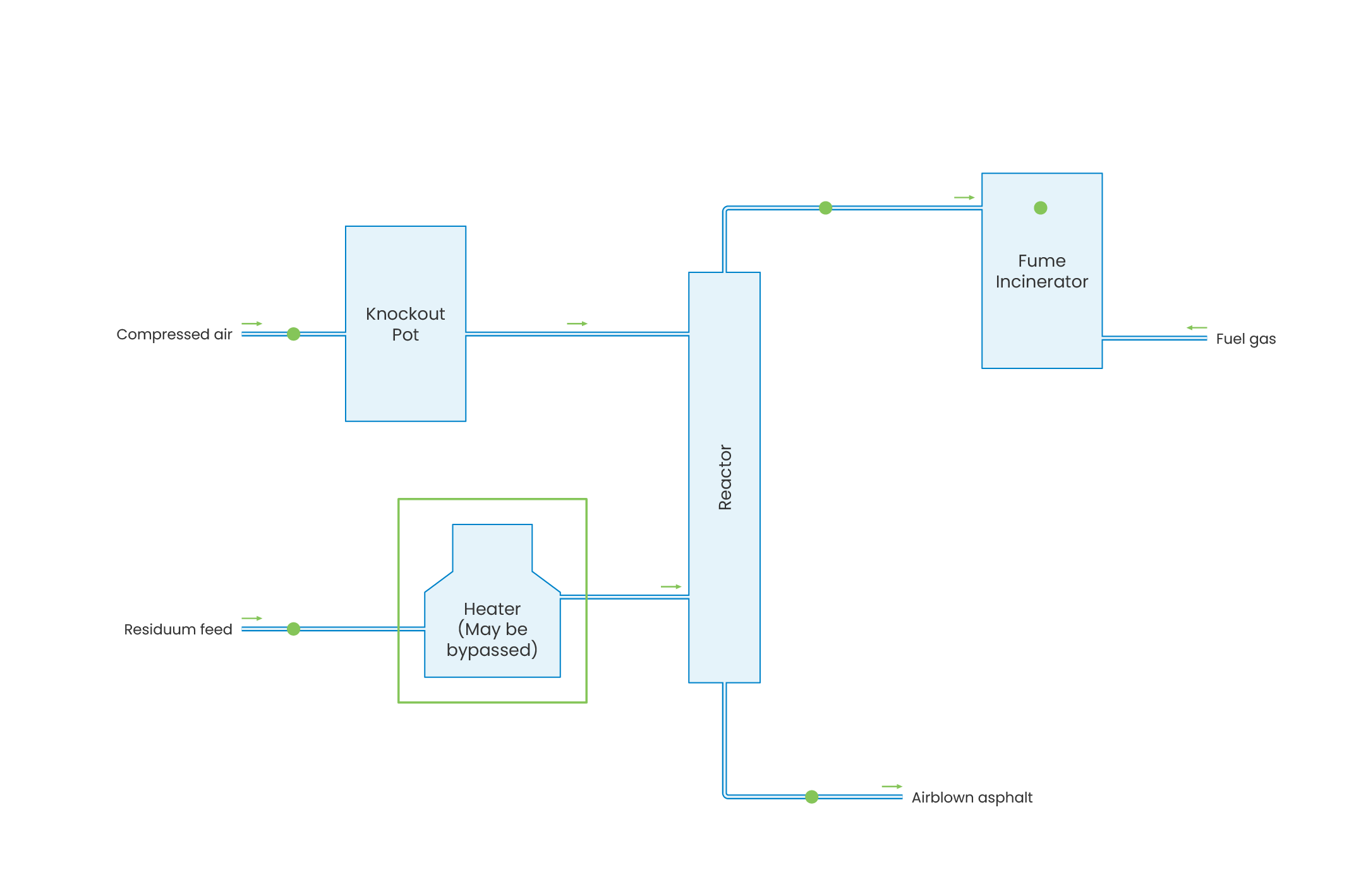
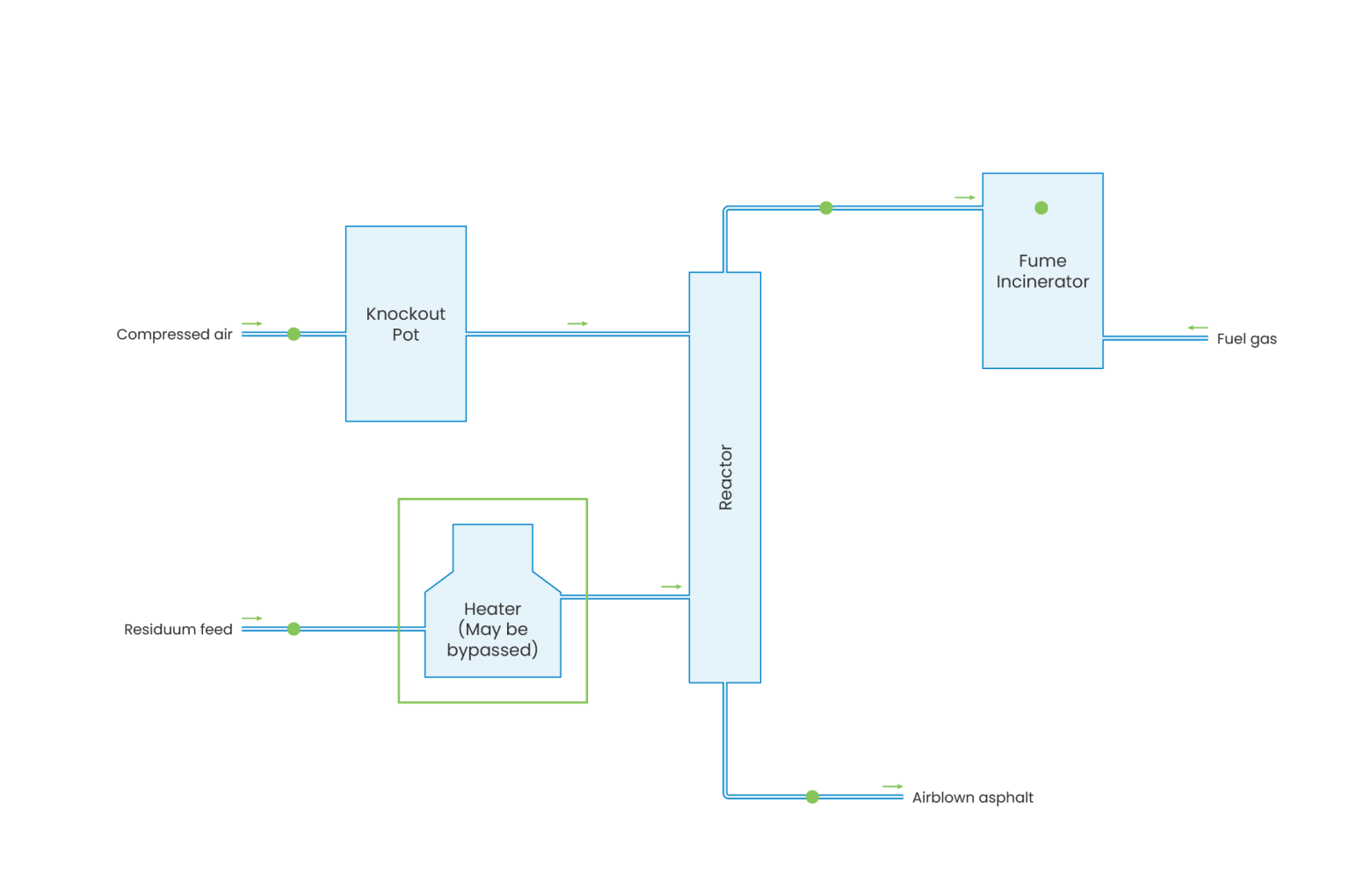
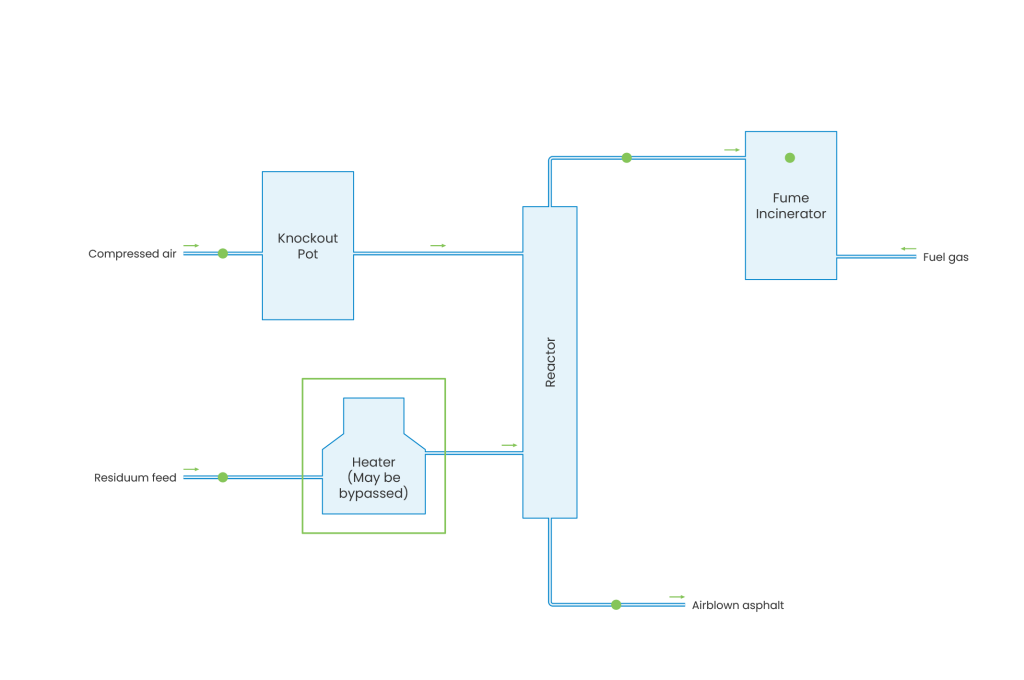
The residue from vacuum distillation may be referred to as asphalt, residuum, or flux. This bottom product is a mixture of resins, asphaltenes, and oils. Resins are highly cross-linked polymers. When heated, these polymers form additional crosslinkages and thus become more rigid. Asphaltenes are high-molecular-weight agglomerates that are insoluble in alkanes from propane to heptane. Asphaltene molecules contain about five aromatic rings arranged in a stack, plus nitrogen, oxygen, sulfur, and some free radical sites. Oils are less complex aromatic compounds. In addition, trace metals such as vanadium and nickel that are present in crude oil tend to become concentrated in asphalt and other heavy oils. Asphalt may also be obtained from solvent deasphalting processes. The asphalt used in road paving is usually the bottoms from vacuum or atmospheric distillation; they need no further processing. The asphalt used in shingles and composition roofing must be harder than that used in paving. Air blowing is used to lower the penetration and to raise the softening point of the asphalt. The improved properties of airblown asphalt–increased hardness, higher melting point, and greater resistance to weathering result from the oxidation reactions which occur during the blowing process. When a very high melting point and extreme hardness are desired, a catalyst (such as ferric chloride or phosphorus pentoxide) is added to the asphalt before it is blown.
top
Inactive
Tailored analytical solutions
for Southeast Asia’s industries.
Inactive
Solving analytical challenges
in every industry,
every day.