Parameter
Potential Technology
Salt
Online Salt-in-Crude Analyzer, Karl Fischer Moisture Analyzer
Total Suspended Solids
Turbidity Sensor
pH
pH Meter
H₂S
Lead Acetate Tape
Light Ends Composition
Gas Chromatograph, Mass Spectrometer
RVP, Sulfur, Octane
Expansion Piston, Syringe Method
Aromatics
UV Fluorescence
Sulfur
NIR Analyzer
Smoke Point, Flash Point
Smoke Point Tester, Flash Point Analyzer
Viscosity, Sulfur
Viscometer, Sulfur Analyzer
Metals, Sulfur, CCR
XRF Analyzer, Sulfur Analyzer, Conradson Carbon Residue Tester
VOC Emissions
Flame Ionization Detector (FID)
pH, Chlorides, Fe Content
pH Analyzer, Chloride Analyzer
Parameter
Salt
Water
Hydrocarbon Composition
Potential Technology
Online Salt-in-Crude Analyzer, Karl Fischer Moisture Analyzer
Parameter
Light Ends Composition
Potential Technology
Gas Chromatograph, Mass Spectrometer
Parameter
RVP
Sulfur
Octane
Potential Technology
expansion piston, syringe method
Sulfur
Octane
Parameter
Smoke Point
Flash Point
Potential Technology
Smoke Point Tester, Flash Point Analyzer
Parameter
Viscosity
Sulfur
Potential Technology
Viscometer, Sulfur Analyzer
Parameter
Metals
Sulfur
CCR
Potential Technology
XRF Analyzer, Sulfur Analyzer, Conradson Carbon Residue Tester
Parameter
pH
Chlorides
FE Content
Potential Technology
pH Analyzer, Chloride Analyzer
Description
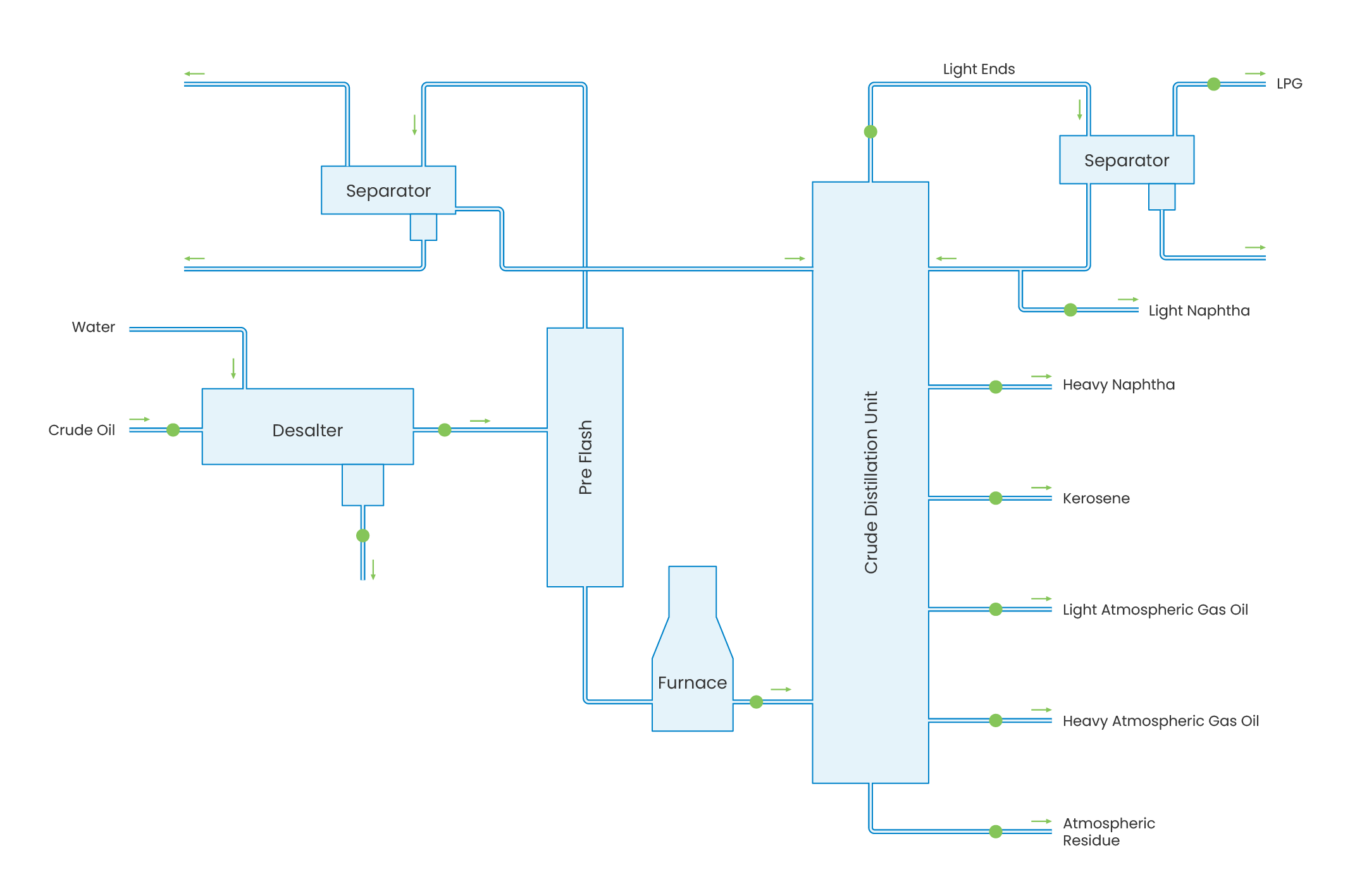
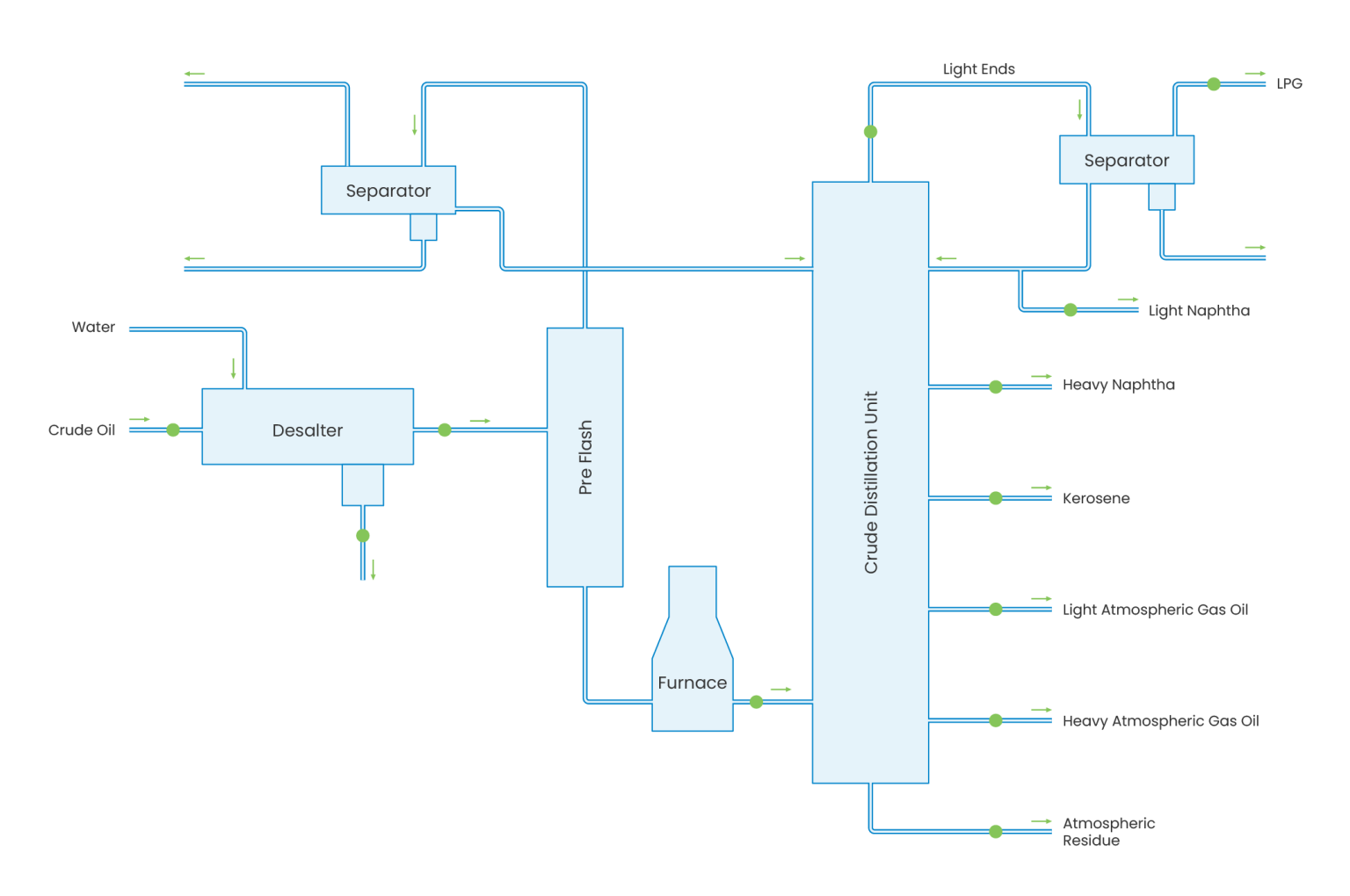
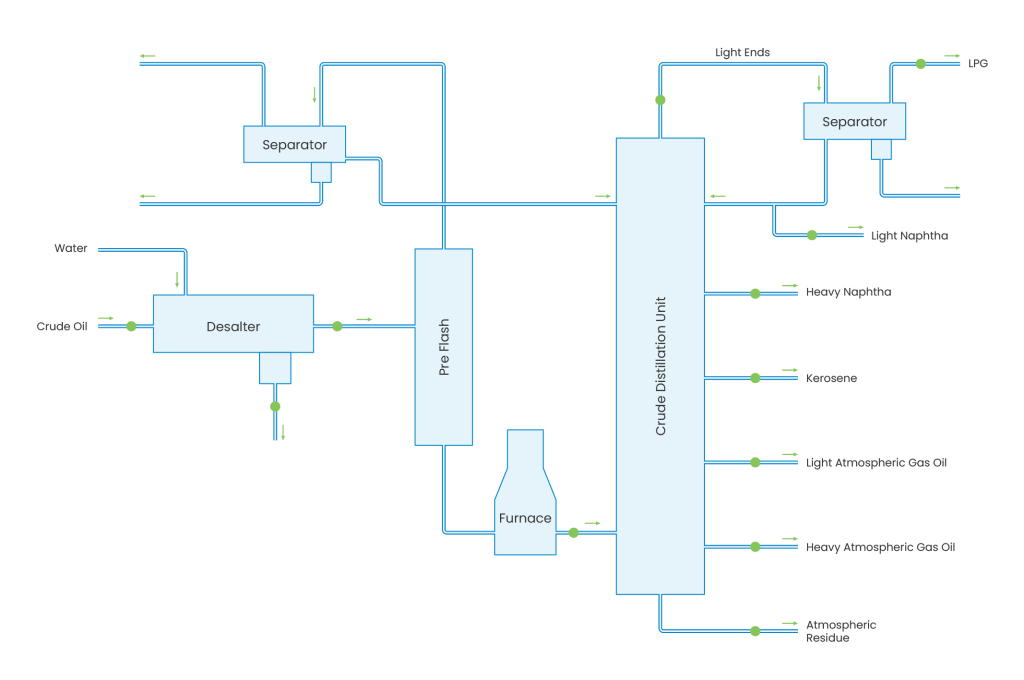
Atmospheric distillation involves the physical separation of hydrocarbon components into fractions or intermediates of a specified boiling temperature range by distillation and steam stripping. Crude is preheated to achieve partial vaporization (liquid and vapor) following which it is then fed to the atmospheric fractionator at a temperature of 340°C to 400°C.
The crude feed is then separated into several petroleum fractions within the atmospheric fractionator where several liquid side stream fractions are withdrawn from the fractionator at different sections (i.e., trays) of the fractionator. This is optimised through a series of side cut steam strippers. A naphtha and lighter stream are taken from the tower overhead, where it is condensed. The non-condensable light ends are treated and/or recovered in other refinery units. Atmospheric residue recovered at the bottom of the fractionator is fed to the Vacuum Distillation Unit (VDU).