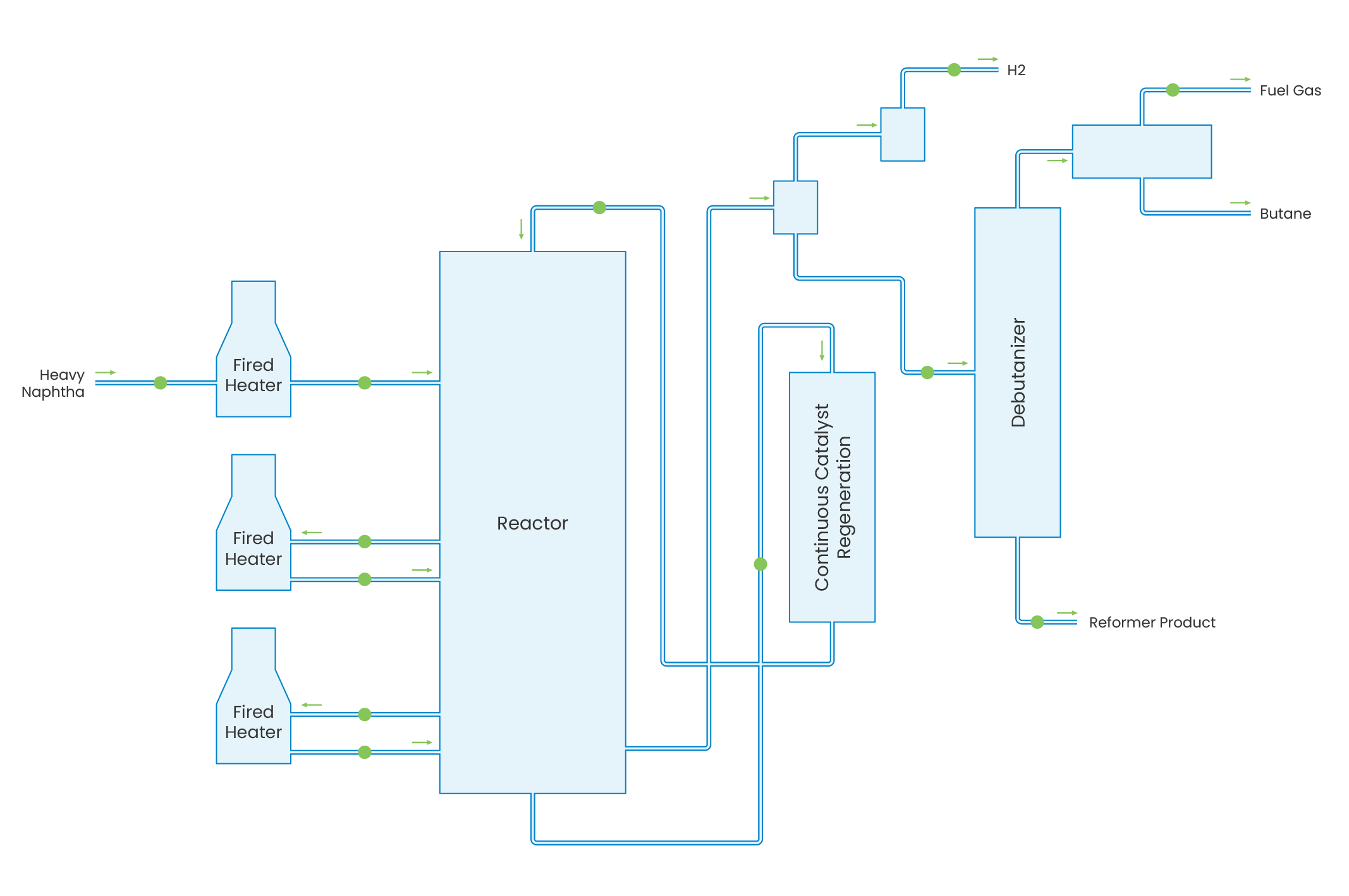
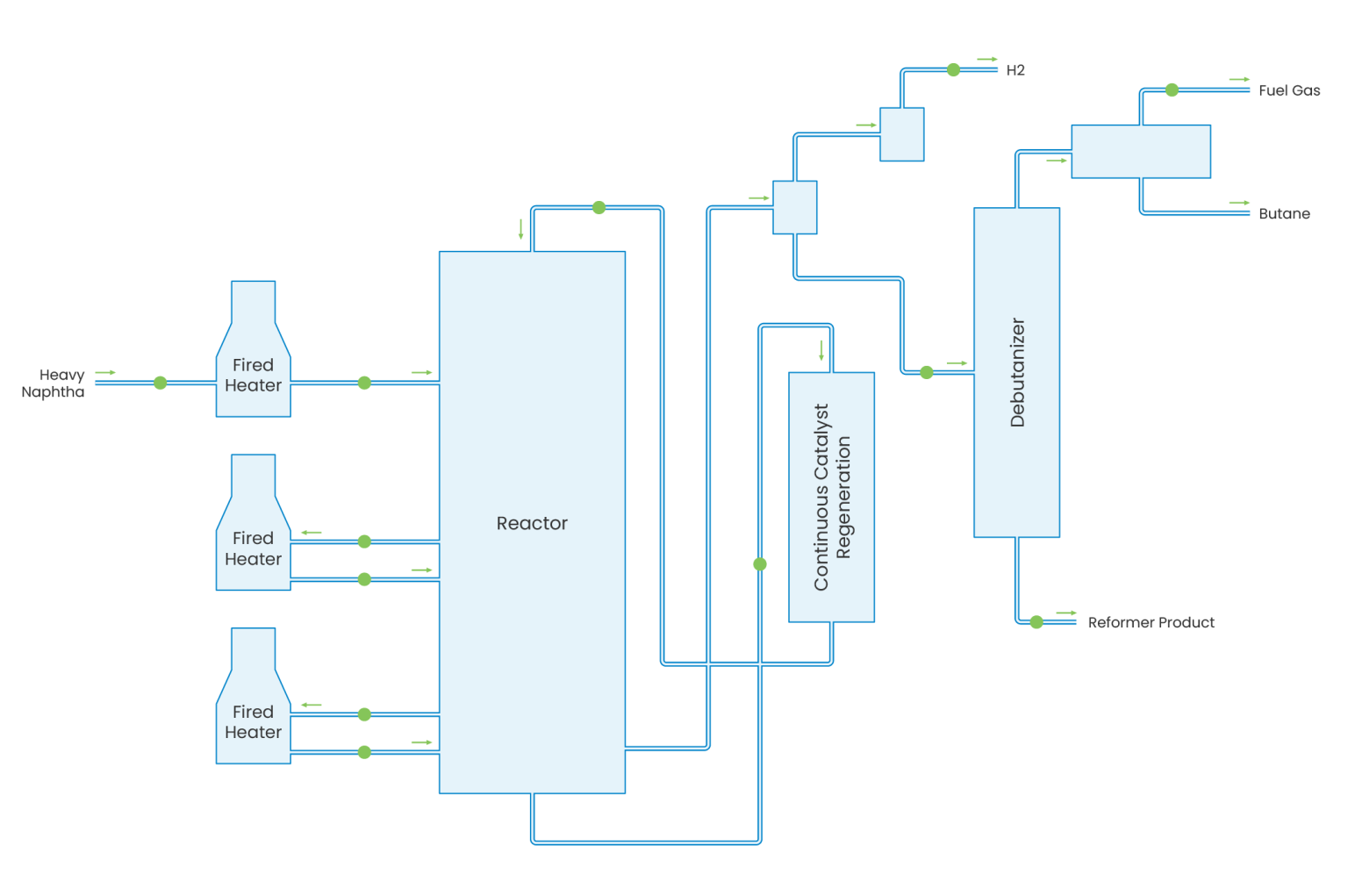
A reformer converts long-chained paraffin and naphthene molecules, which generally have low octane, into aromatics such as benzene, toluene and xylenes, which have high octane. Since benzene content is limited in gasoline, the reformer feedstock is tailored by distillation to minimise benzene yield unless petrochemical benzene is desired.
One of the side reactions of reforming is the formation of a small amount of coke, essentially carbon, on the catalyst which deactivates the catalyst over time. The CCR is designed to burn coke off the catalyst continuously, maintaining unit performance for several years without shutting down. Hydrotreated naphtha feed is combined with recycle hydrogen gas and heated to reaction temperature before being fed to the reactor section. The effluent from the last reactor (reformate) is cooled and split into vapour and liquid products in a separator. Reformate can be sent to a reformate splitter to separate light from heavy reformate. The vapour phase is rich in hydrogen gas. A portion of the gas is compressed and recycled back to the reactors. The net gas is hydrogen-rich and is typically further processed to produce a hydrogen-rich stream for use in hydrotreating units.
top
Inactive
Tailored analytical solutions
for Southeast Asia’s industries.
Inactive
Solving analytical challenges
in every industry,
every day.