- H₂S
- Total sulfur
- Hydrogen (H₂)
- HC LEL & H₂S (safety)
- Total sulfur
- Density/API
H₂S in gas
H₂S in water
H₂S in liquid
H₂S in gas
Water-in-oil
- Viscosity
- Density/API
O₂ (trim/safety)
- NOₓ
- SO₂
- CO
- O₂
- Dust/opacity
HC LEL & H₂S (area)
- Oil-in-water
- TSS/Turbidity
COD/TOC
Particulate (dust)
Conductivity/
silica (utility QC)
- H₂S
- Total sulfur
- Hydrogen (H₂)
- HC LEL & H₂S (safety)
- Total sulfur
- Density/API
H₂S in gas
H₂S in water
H₂S in liquid
H₂S in gas
Water-in-oil
- Viscosity
- Density/API
O₂ (trim/safety)
- NOₓ
- SO₂
- CO
- O₂
- Dust/opacity
HC LEL & H₂S (area)
- Oil-in-water
- TSS/Turbidity
COD/TOC
Particulate (dust)
Conductivity/
silica (utility QC)
Parameter
Potential Technology
H₂S
TDLAS or UV photometry (extractive)
Total sulfur
UV fluorescence / micro-GC sulfur
Hydrogen (H₂)
Thermal conductivity or GC
HC LEL & H₂S (safety)
Fixed catalytic/IR LEL + electrochemical H₂S
Total sulfur
UV fluorescence (liquid extractive)
Density/API
Inline density / Coriolis
H₂S in gas
TDLAS or UV photometry
H₂S in water
Online colorimetric / ISE
H₂S in liquid
UV (liquid extractive)
Water-in-oil
Inline NIR / microwave
Viscosity
Inline torsional/capillary viscometer
O₂ (trim/safety)
Zirconia O₂ (in-situ)
NOₓ, SO₂, CO, O₂
CEMS (NDIR/UV + ZrO₂)
Dust/opacity
Opacity/PM monitor
HC LEL & H₂S (area)
Fixed gas detectors (IR/catalytic + electrochemical)
Oil-in-water
Fluorescence/IR OIW analyzer
TSS/Turbidity
Optical attenuation/ scatter
COD/TOC
Online UV persulfate TOC / COD
Particulate (dust)
PM monitor (ambient/duct)
Conductivity/silica (utility QC)
Online conductivity / silica analyzer
Parameter
H₂S
Total sulfur
Hydrogen (H₂)
HC LEL & H₂S (safety)
Potential Technology
TDLAS or UV photometry (extractive)
UV fluorescence / micro-GC sulfur
Thermal conductivity or GC
Fixed catalytic/IR LEL + electrochemical H₂S
Parameter
Total sulfur
Density/API
Potential Technology
UV fluorescence (liquid extractive)
Inline density / Coriolis
Parameter
Viscosity
Density/API
Potential Technology
Inline torsional/capillary viscometer
Inline density / Coriolis
Parameter
NOₓ, SO₂, CO, O₂
Dust/opacity
Potential Technology
CEMS (NDIR/UV + ZrO₂)
Opacity/PM monitor
Parameter
HC LEL & H₂S (area)
Potential Technology
Fixed gas detectors (IR/catalytic + electrochemical)
Parameter
Oil-in-water
TSS/Turbidity
Potential Technology
Fluorescence/IR OIW analyzer
Optical attenuation/scatter
Parameter
Conductivity/silica (utility QC)
Potential Technology
Online conductivity / silica analyzer
Description
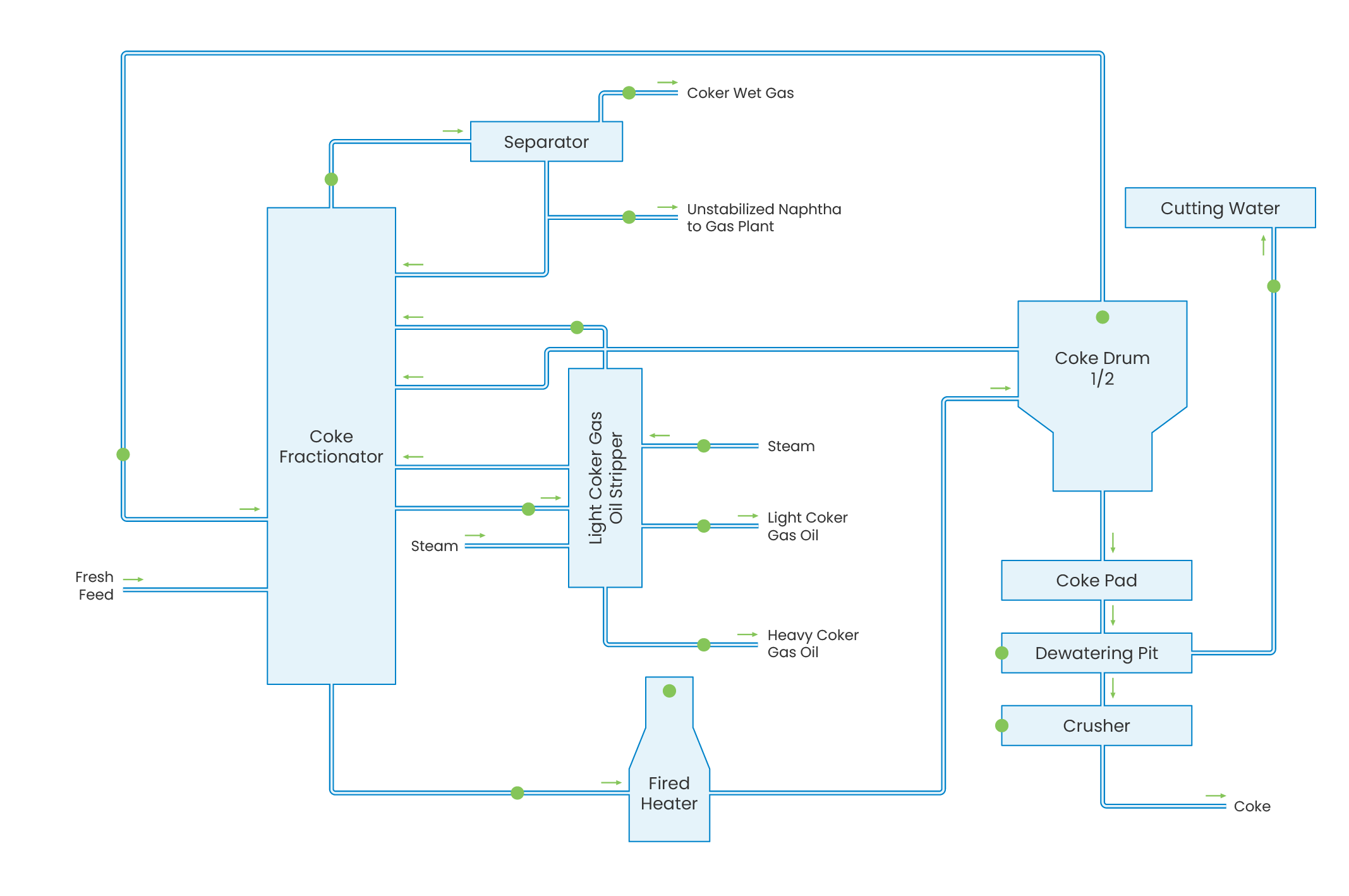
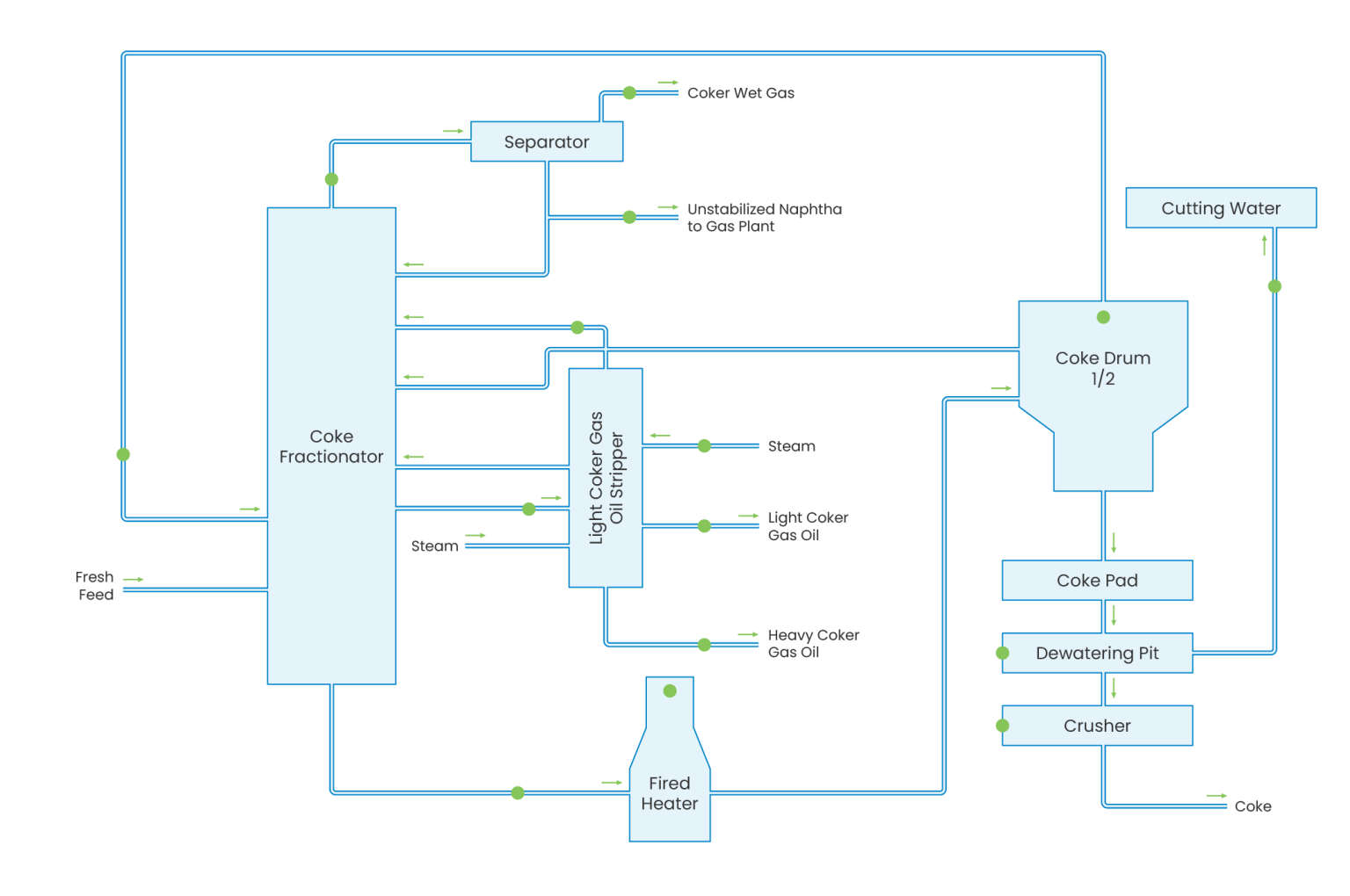
The vacuum residue feed is preheated and then introduced to the feed zone of the coker fractionator tower. The fractionator bottoms is heated in a carefully engineered multi-pass coker heater furnace to optimal high coil outlet temperatures to minimise the deposition of fouling coke within the furnace tubes. Coking of the feed is delayed until the feed mixture reaches the coke drum.
Within the coke drums, the hot liquid vacuum residue undergoes further controlled thermal cracking at appropriate temperatures and pressures. Petroleum coke slowly builds up in the on-stream coke drums until a designated level is reached, while light hydrocarbons simultaneously leave the on-stream coke drum as overhead products and are routed back to the coker fractionator. In the fractionator, the liquid phase, naphtha and gas-oils are recovered, while the remaining gas phase exits the coker fractionator accumulator. The overhead off-gas from the DCU is routed into the fuel gas system.
When a coke drum is full, it is switched off-line and Petcoke is then removed by hydraulic decoking using a jet pump system. Continuous operation is maintained by switching coke drums once the online drum reaches the expected coke inventory target level. Coke is moved to coke crushers and belts for transfer to interim inventory or to rail car loading via either a bridge crane or large front end bucket loaders.