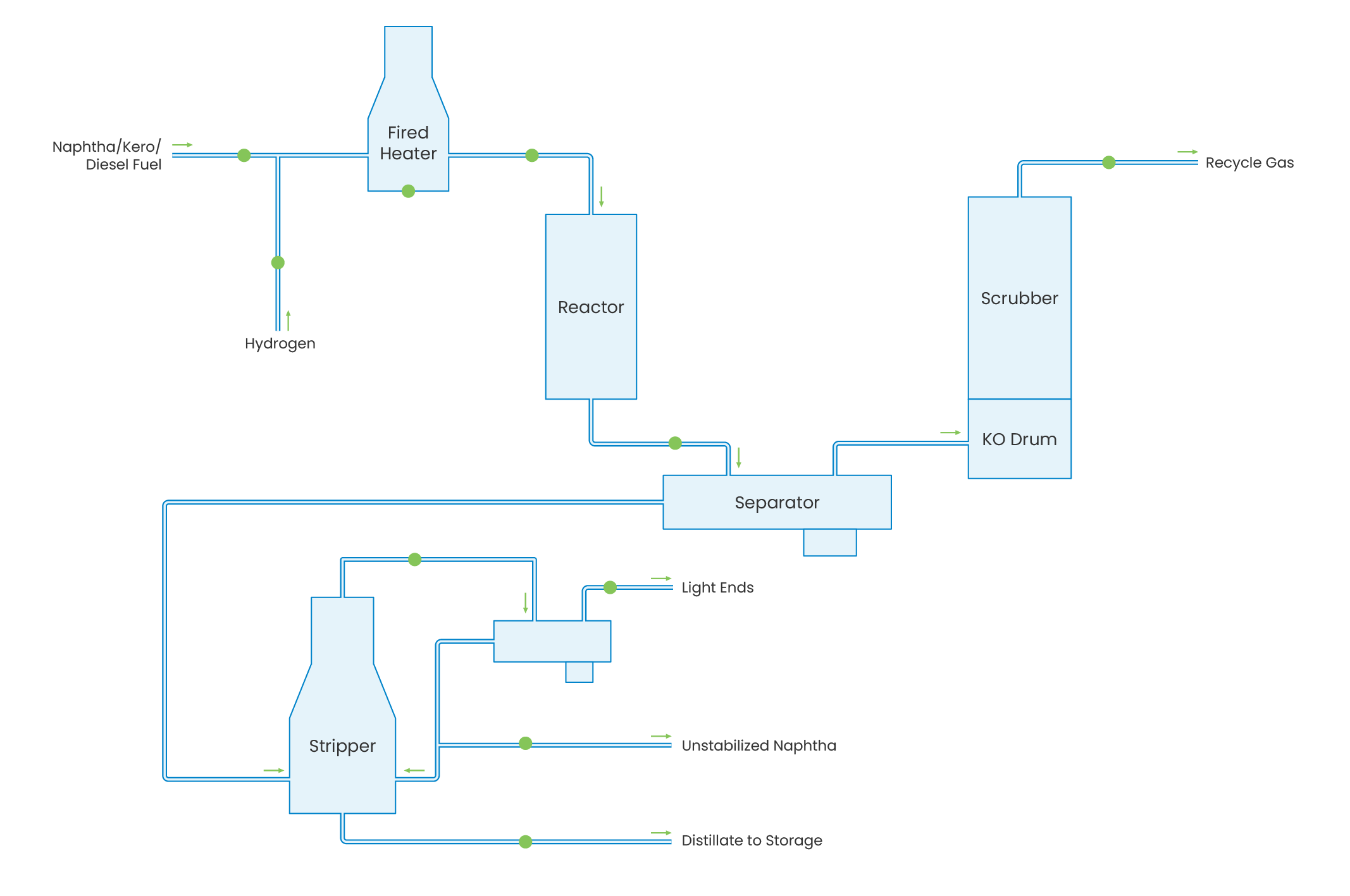
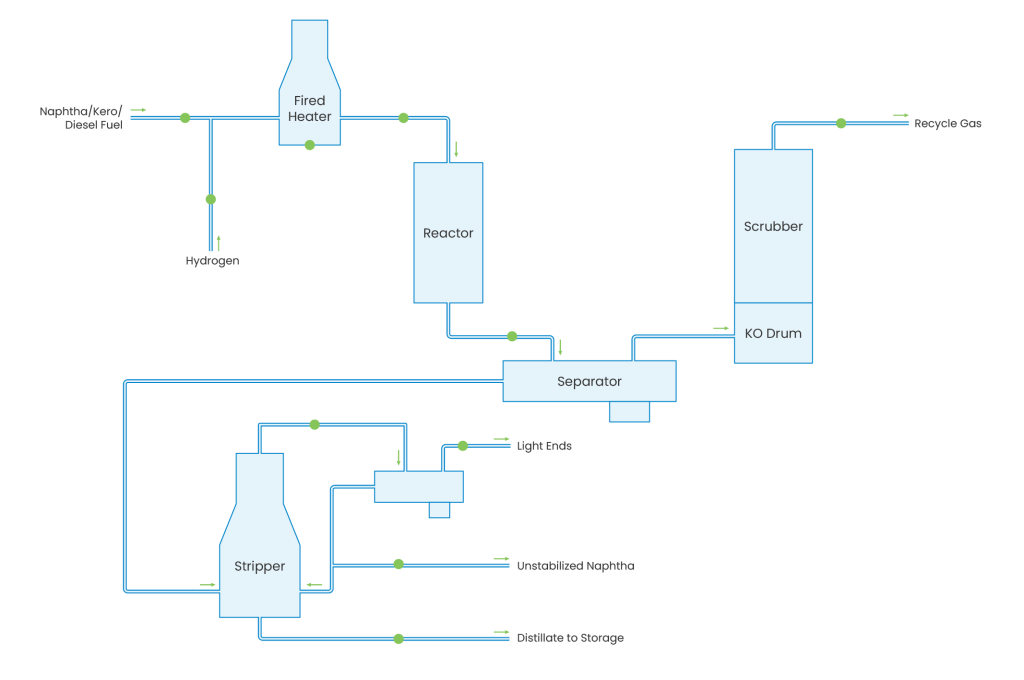
A diesel or distillate hydrotreater can be fed with a mixture of various distillate streams (such as straight-run diesel) depending on the refinery’s configuration. Feed is heated and is mixed with hydrogen gas. The combined feed is heated is then passed over the catalyst bed to complete the desired reactions.
The reactor effluent is subjected to a series of cooling, stripping and washing operations to recover light ends, fuel gas, H2S and sour water. The light ends and gases are then either sent for further processing (e.g., wild naphtha stream is routed to the naphtha hydrotreating unit) or routed into the fuel gas system. The H2S is sent further processing in the Sulphur Recovery Unit (SRU).
The hydrotreated diesel is cooled before it is routed to a product vacuum drying system. Dried diesel product is cooled before routing to product storage.
top
Inactive
Tailored analytical solutions
for Southeast Asia’s industries.
Inactive
Solving analytical challenges
in every industry,
every day.