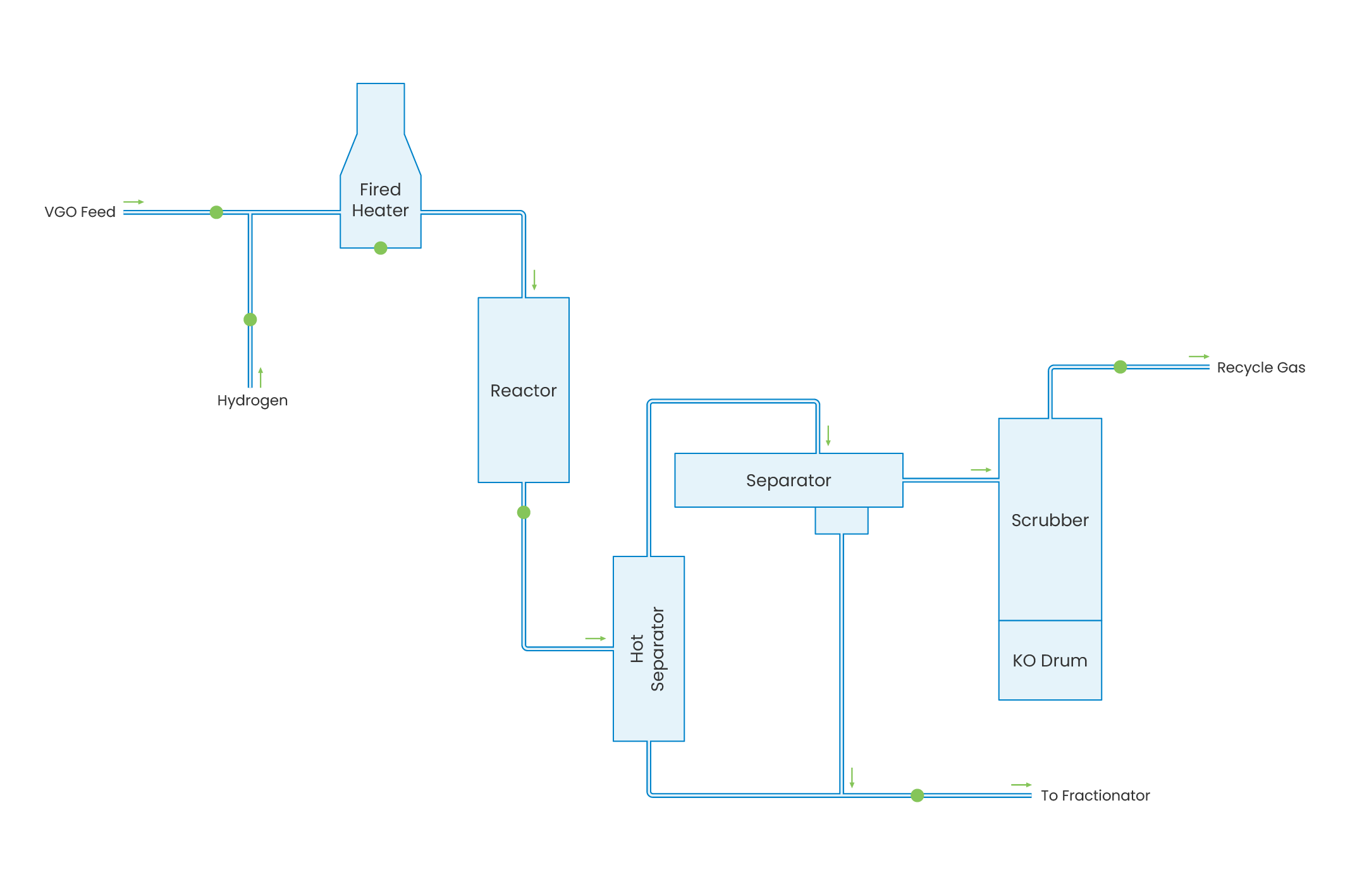
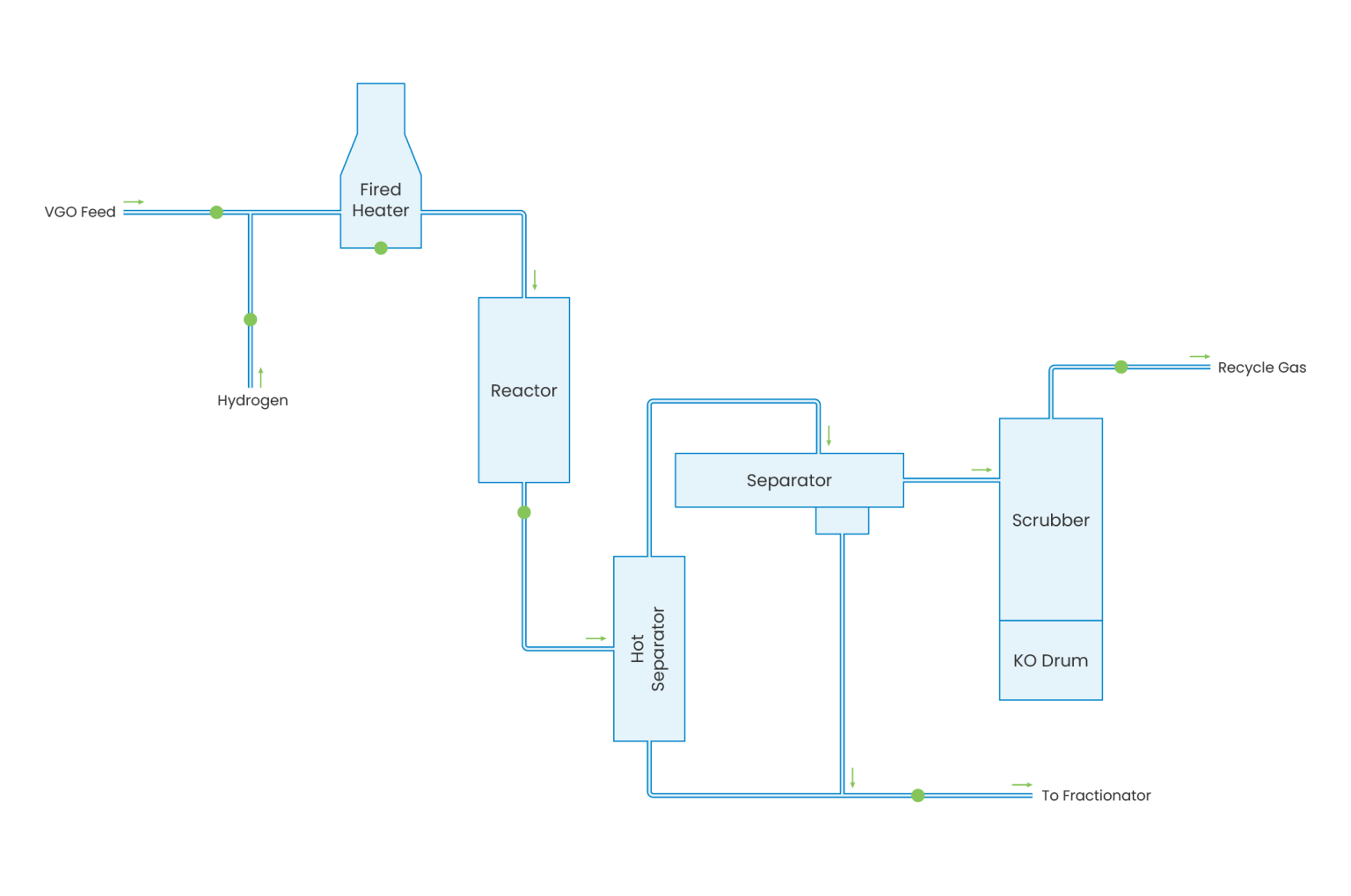
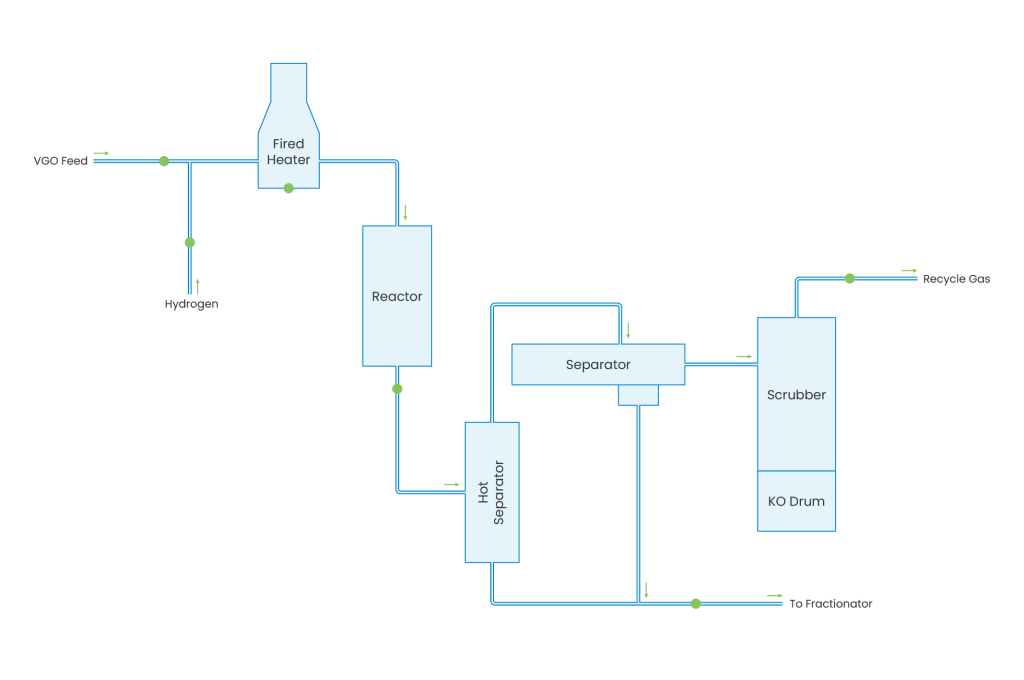
The FCC feed hydrotreater allows Vacuum Gas Oil to be hydrodesulphurised prior to feeding the FCC. This results in products that are lower in sulphur for blending to final product specifications (notably gasoline blending specifications).
VGO (Vacuum Gas Oil) from VDU is routed to the VGO Hydrotreater Unit for removal of Sulphur and other contaminants to extract maximum benefit from the downstream FCC unit where this treated VGO is converted to high value products. Products from an FCC which process hydrotreated VGO are of better quality than those from non-hydrotreated feedstock.The VGO hydrotreater operates essentially as any hydrotreater operation. Oil is combined with hydrogen and heated to @ 650°F (about 350°C), then sent through a fixed bed reactor. Sulphur and nitrogen compounds are removed from the oil and reacted into hydrogen sulphide and ammonia, respectively. Hydrogen is recompressed and recycled to the front of the unit. The primary differences between hydrotreaters operating on different feeds are operating pressure, the amount of catalyst, and hydrogen recirculation and make-up requirements. The VGO hydrotreater is normally operating at higher pressure than naphtha and diesel hydrotreaters.
top
Inactive
Tailored analytical solutions
for Southeast Asia’s industries.
Inactive
Solving analytical challenges
in every industry,
every day.