Parameter
Potential Technology

Sulfur content

UV fluorescence analyzer

Composition (C₃/C₄ split)

Process GC

RVP contribution

Process GC or NIR

RON

NIR analyzer

Benzene, aromatics, RON

NIR or process GC

Freeze point

NIR analyzer

Smoke point

NIR analyzer

Cetane index

NIR analyzer

Olefins content

NIR analyzer

Viscosity

Inline torsional/capillary viscometer

RVP

NIR analyzer

Dust (PM)

PM monitor

Softening point correlation

NIR analyzer

RON, MON, RVP, benzene, oxygenates

Online NIR analyzer

RON, MON, RVP

NIR analyzer

Description

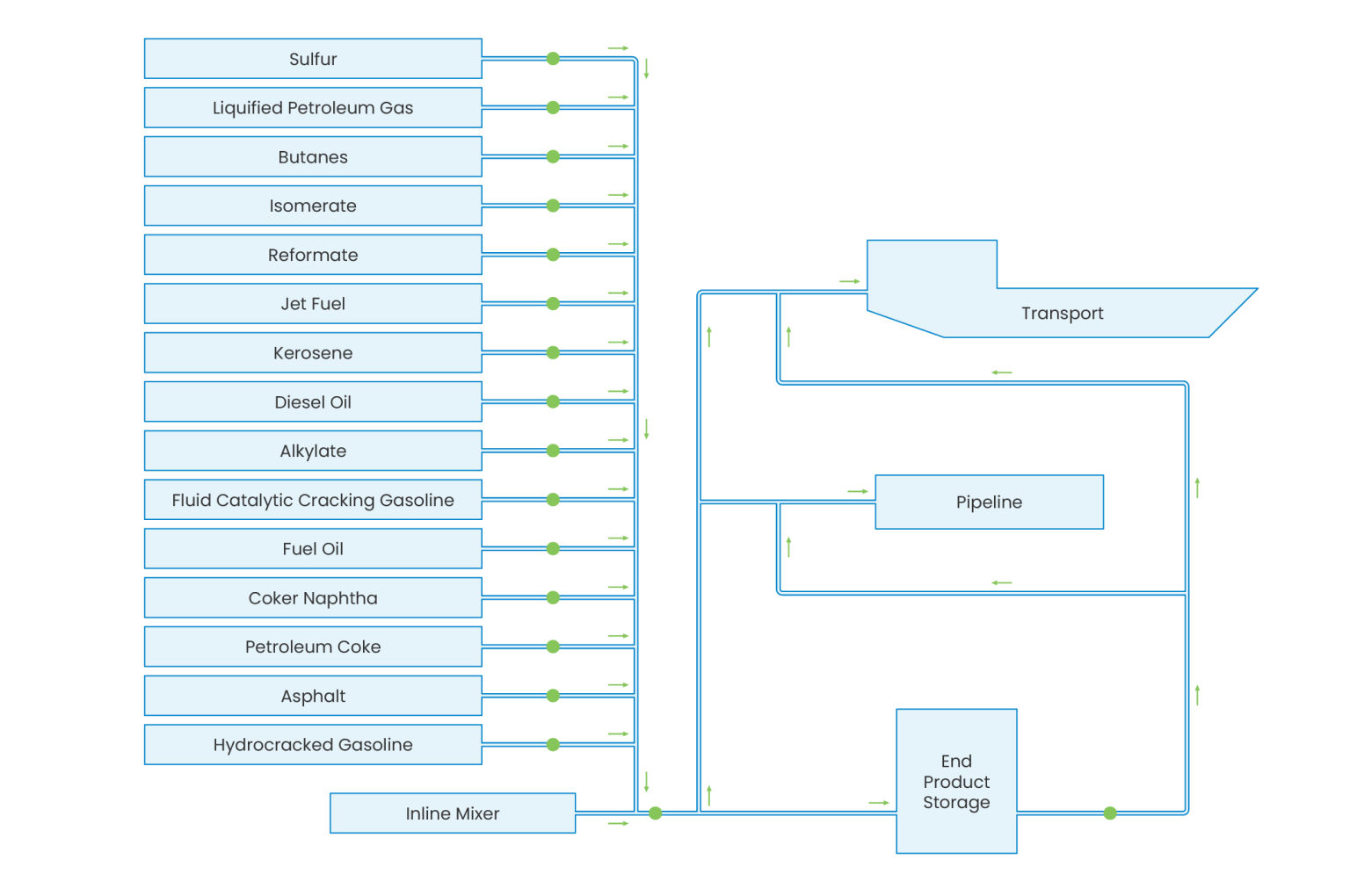
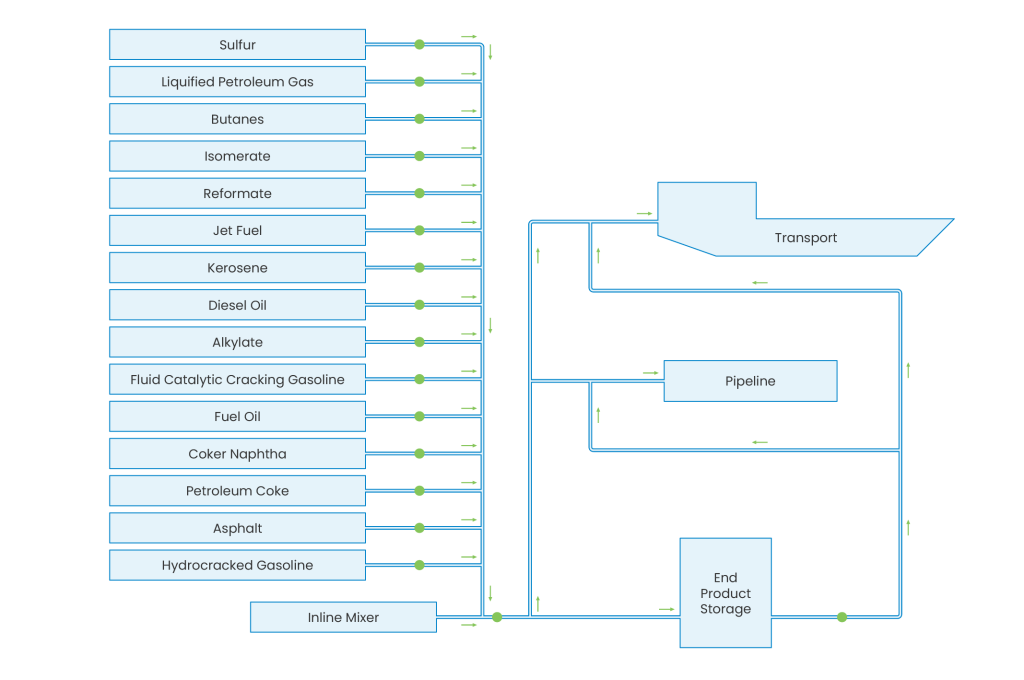
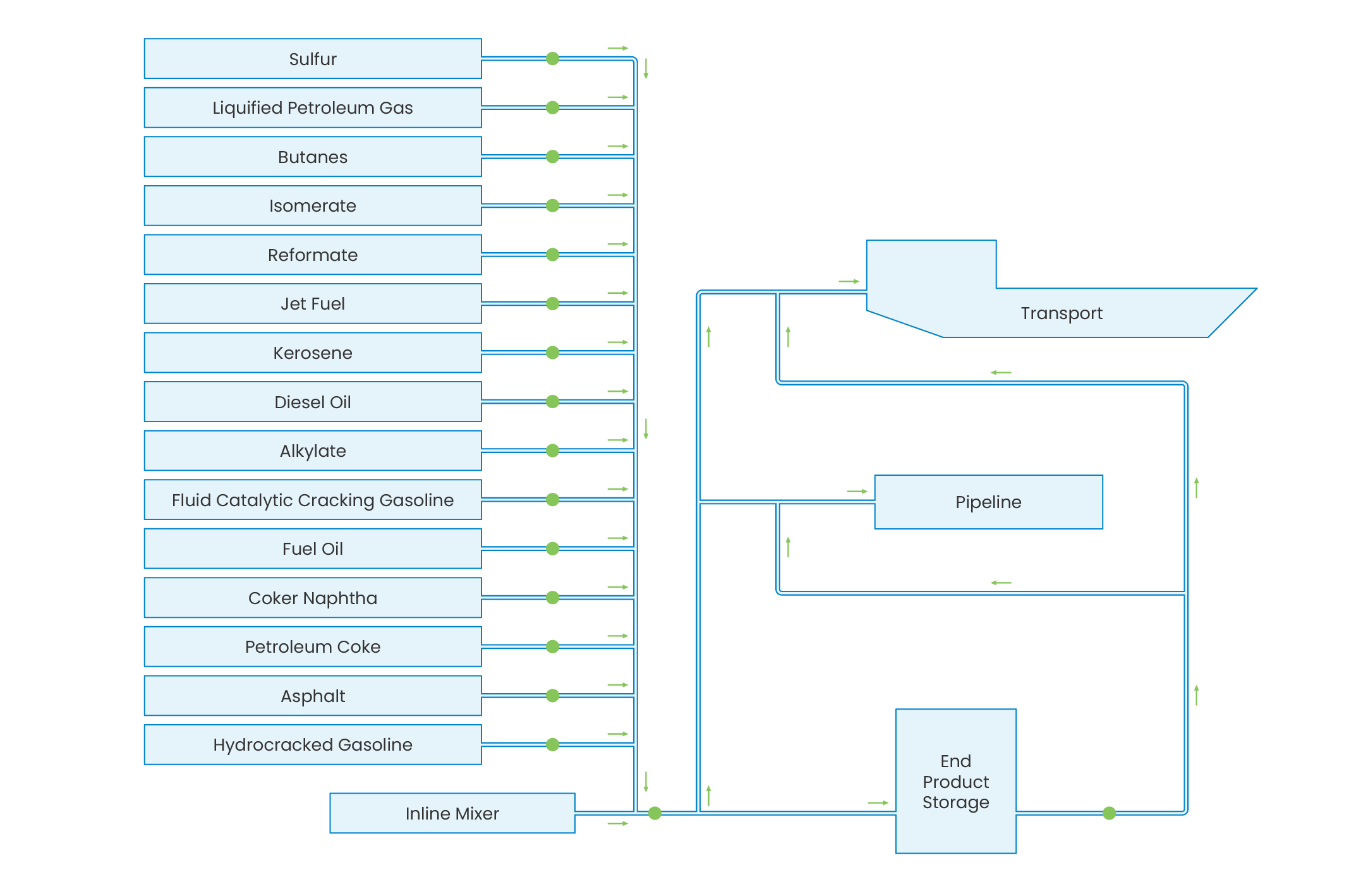
The Gasoline Blending Pool Unit in a refinery is a critical part of the downstream process where various hydrocarbon streams are mixed to produce finished gasoline that meets required quality specifications. These streams typically include reformate, FCC naphtha, alkylate, isomerate, and light hydrocarbons like butanes. Each component contributes specific properties such as octane rating, vapor pressure, and sulfur content. The blending process is carefully controlled to ensure the final gasoline complies with environmental regulations and market demands for performance. Parameters like Research Octane Number (RON), Reid Vapor Pressure (RVP), sulfur levels, and aromatic content are continuously monitored, often with the help of online analyzers such as octane analyzers, NIR (near-infrared) spectrometers, and sulfur analyzers. This unit plays a key role in maximizing product value while ensuring fuel quality and compliance.