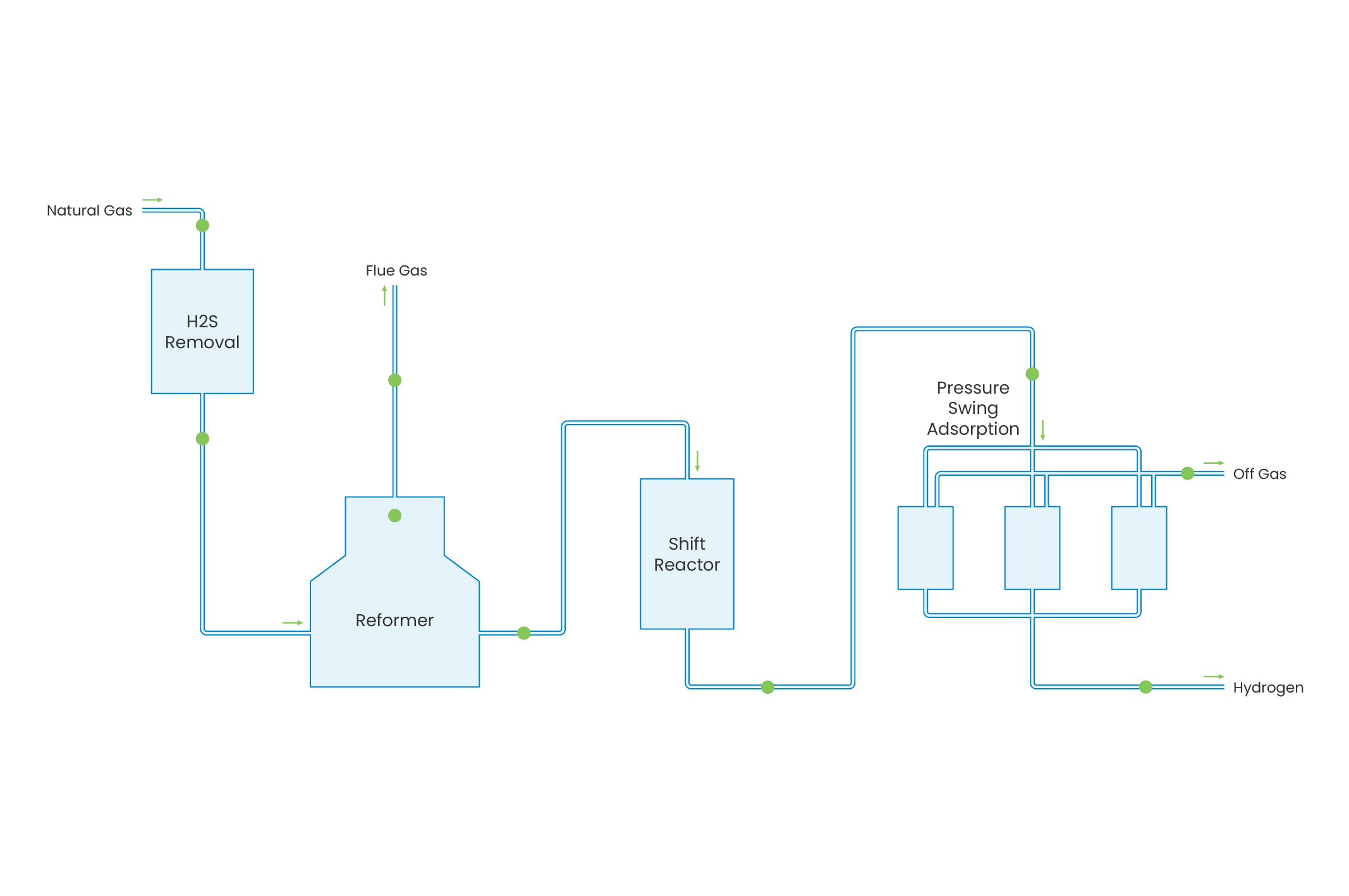
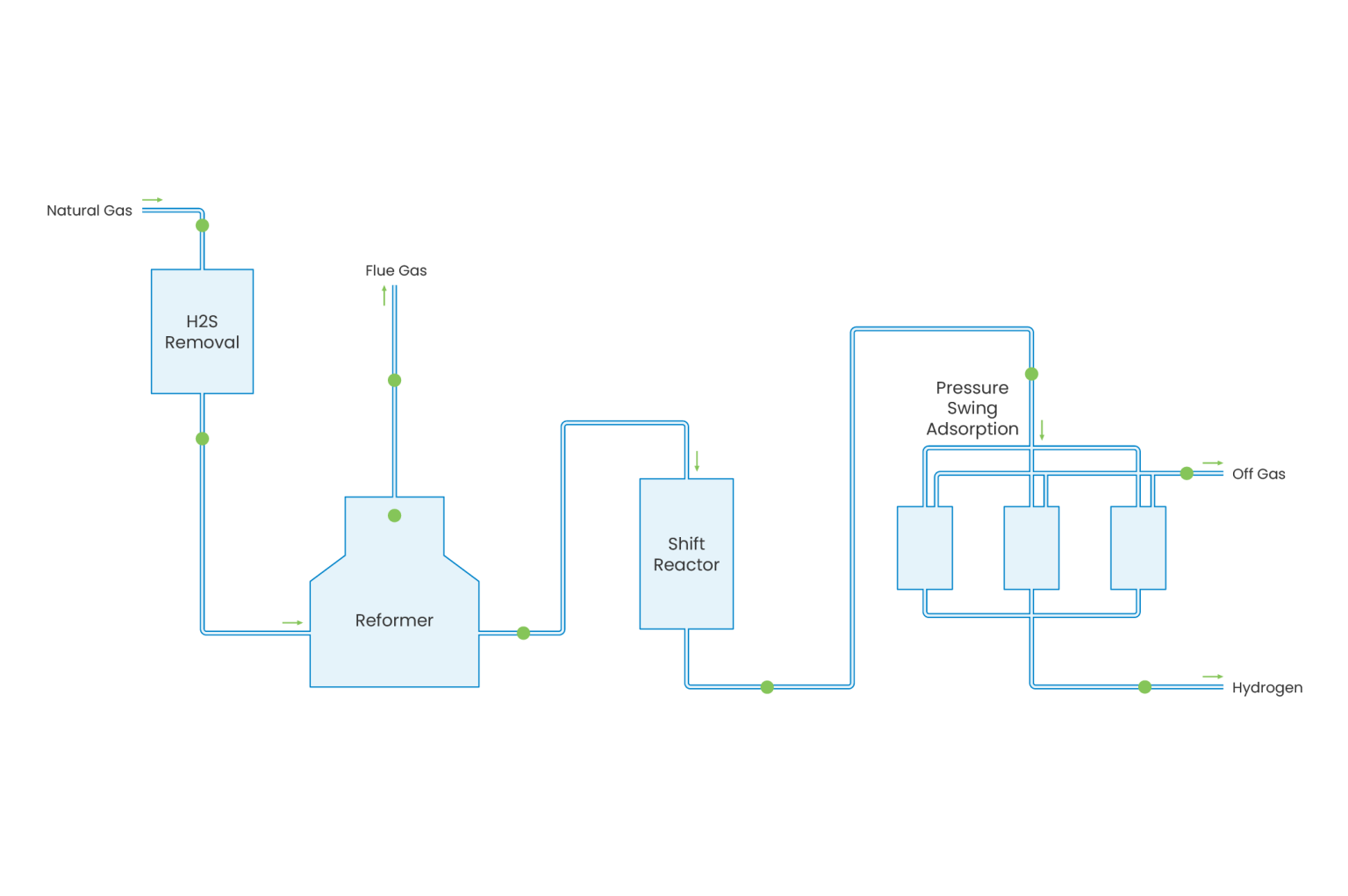
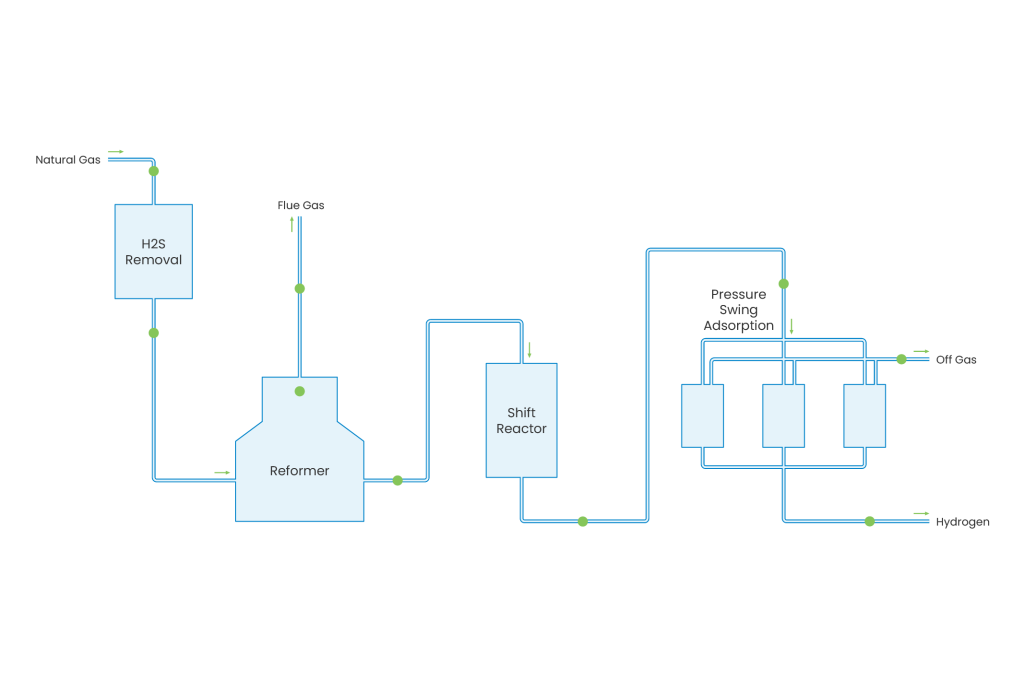
Hydrogen can be produced from a wide range of feedstocks. Methods to produce hydrogen from natural gas are well-developed and account for half of hydrogen production globally. The majority of units are based on steam methane reforming (SMR). The first step of the SMR hydrogen process is the feedstock pre-treatment, where traces of catalyst poisons such as sulphur, chlorine and volatile transition element metals are removed from the feed using a combination of hydrotreating catalyst and zinc oxide.
Hydrogen purification is accomplished in the Pressure Swing Adsorption (PSA) unit. The PSA technology makes use of the physical phenomena that the feed gas components (beside hydrogen) are adsorbed on the adsorption material at a high pressure. The PSA process works at basically constant temperature and uses the effect of alternating pressure and partial pressure to perform adsorption and desorption
top
Inactive
Tailored analytical solutions
for Southeast Asia’s industries.
Inactive
Solving analytical challenges
in every industry,
every day.