Parameter
Potential Technology
H₂S
Online H₂S Analyzer (UV or Electrochemical)
Mercaptans
Gas Chromatograph (GC) or UV Fluorescence Analyzer
O₂
Paramagnetic or Electrochemical O₂ Analyzer
pH
Online pH Meter
Total Sulfur
Total Sulfur Analyzer (UV Fluorescence or XRF)
Disulfide Oil
Gas Chromatograph (GC)
Hydrocarbon Composition
Process Gas Chromatograph
Dissolved O₂
Optical or Electrochemical Dissolved O₂ Sensor
Water Content
Moisture Analyzer
Parameter
H₂S
Mercaptans
Hydrocarbon Composition
Potential Technology
Online H₂S Analyzer (UV or Electrochemical)
Gas Chromatograph (GC) or UV Fluorescence Analyzer
Process Gas Chromatograph
Parameter
Mercaptans
Disulfide Oil
Potential Technology
Gas Chromatograph (GC) or UV Fluorescence Analyzer
Gas Chromatograph (GC)
Parameter
H₂S
Mercaptans
Total Sulfur
Dissolved O₂
Potential Technology
Online H₂S Analyzer (UV or Electrochemical)
Gas Chromatograph (GC) or UV Fluorescence Analyzer
Total Sulfur Analyzer (UV Fluorescence or XRF)
Optical or Electrochemical Dissolved O₂ Sensor
Parameter
Dissolved O₂
Potential Technology
Optical or Electrochemical Dissolved O₂ Sensor
Description
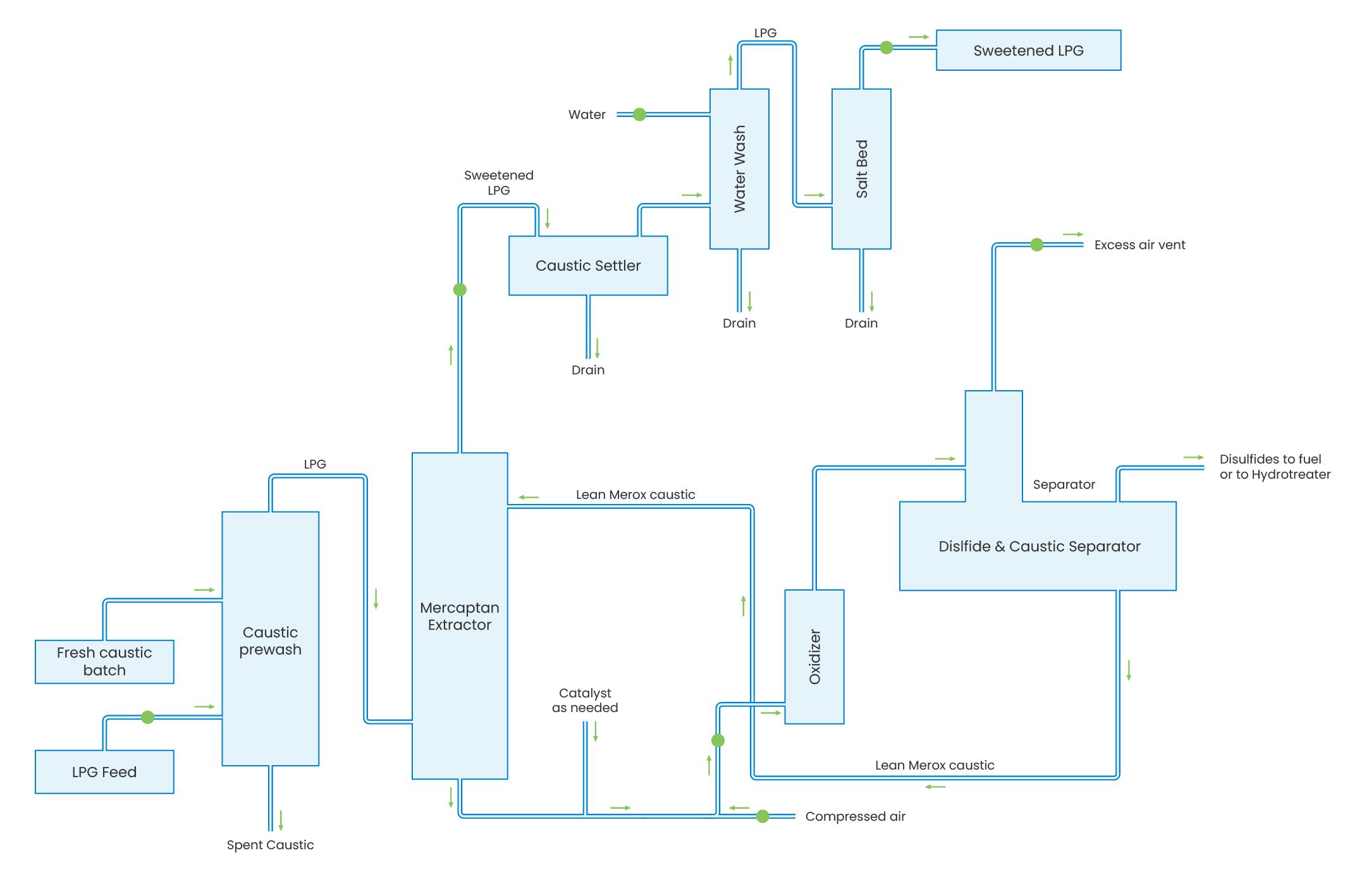
The Merox process is an efficient and economical catalytic process developed for the chemical treatment of petroleum fractions to remove sulfur present as mercaptans (Merox extraction) or to directly convert mercaptan sulfur to less objectionable disulfides (Merox sweetening). This process is used for liquid-phase treating of liquefied petroleum gases (LPG), natural-gas liquids (NGL), naphtha, gasolines, kerosene, jet fuels, and heating oils. It also can be used to sweeten natural gas, refinery gas, and synthetic gas in conjunction with conventional pretreatment and posttreatment processes.