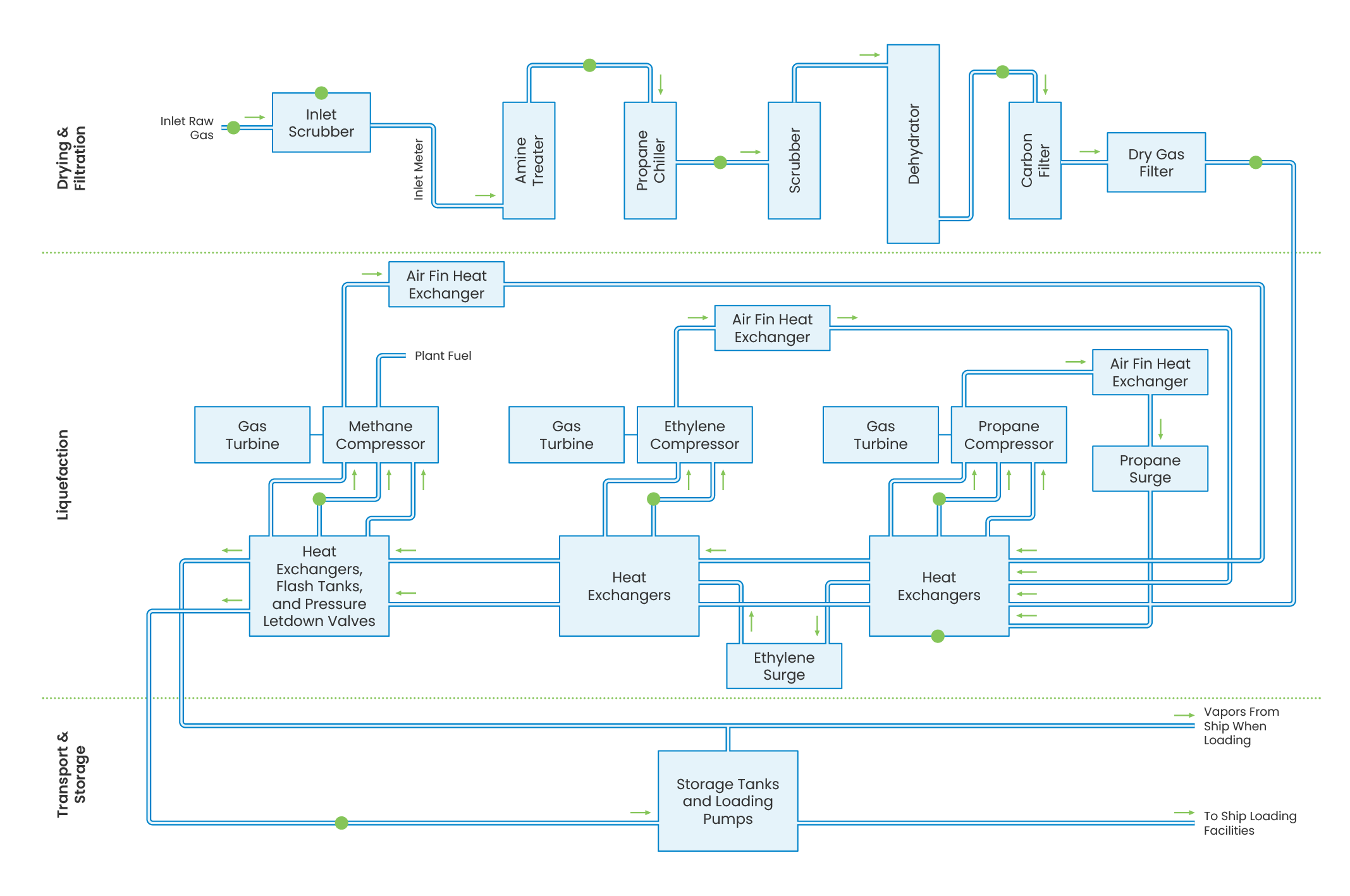
In the midstream LNG process, raw natural gas is first conditioned and purified to meet cryogenic operating requirements. Inlet separation and filtration remove free liquids, solids, and aerosols, while acid gas removal and dehydration systems eliminate CO₂, sulfur compounds, and moisture that could freeze or damage equipment at low temperatures. Final polishing filters ensure the gas meets stringent cleanliness specifications before entering the liquefaction section. Following purification, the treated gas undergoes multi-stage cooling and refrigeration, typically using propane, ethylene, or mixed refrigerant cycles. Heat exchangers progressively reduce the gas temperature while maintaining controlled pressure conditions. Compression stages provide the necessary energy to support refrigeration efficiency and stable process operation. The gas is ultimately cooled to cryogenic conditions, where it condenses into liquid LNG. This liquefaction step produces a stable, high-purity liquid suitable for downstream storage, transportation, and export, forming the critical transition point between gas treatment and LNG handling within the midstream value chain.
top
Inactive
Tailored analytical solutions
for Southeast Asia’s industries.
Inactive
Solving analytical challenges
in every industry,
every day.