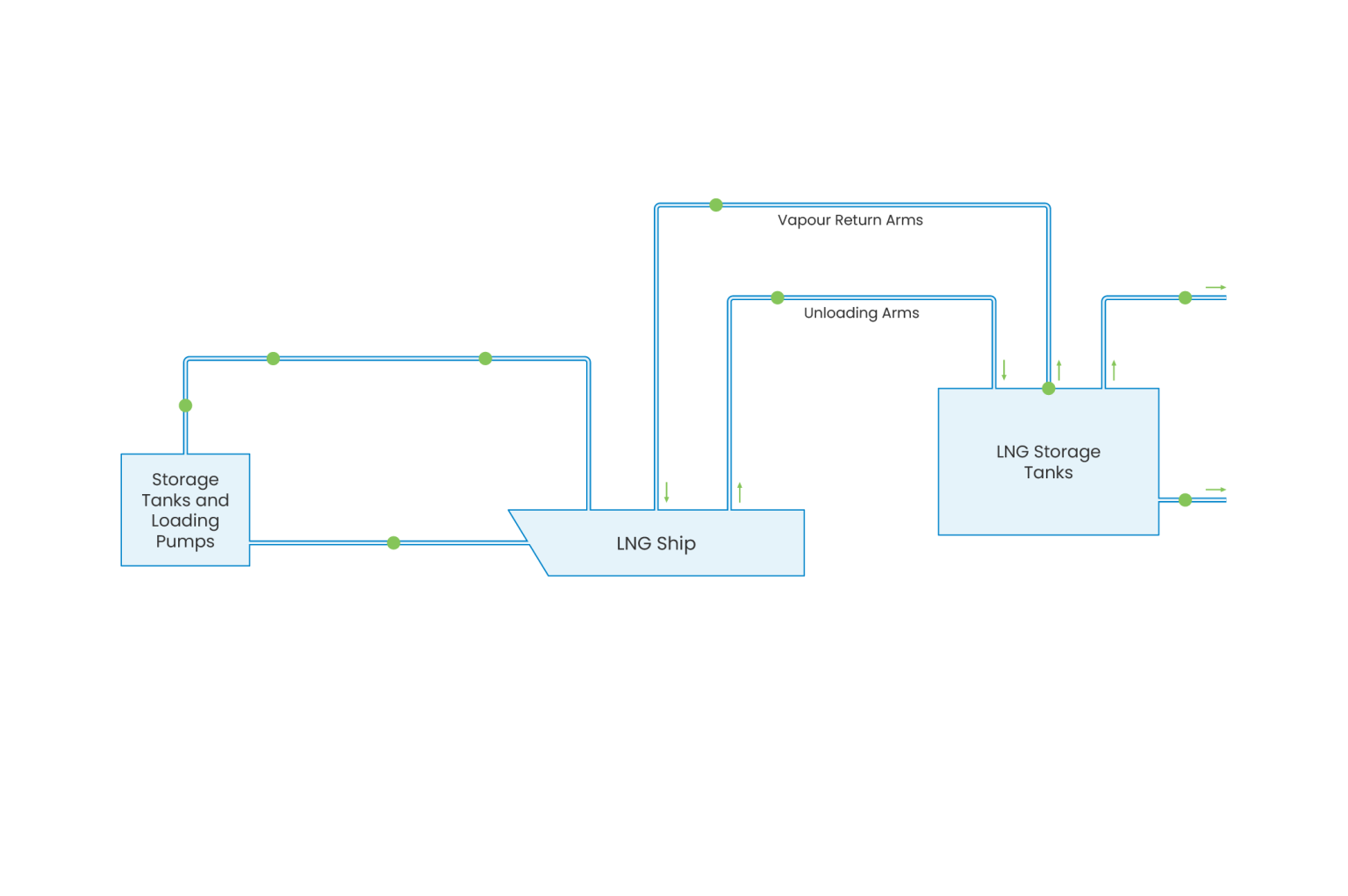
Following liquefaction, LNG is transferred to cryogenic storage tanks designed to safely contain the liquid at extremely low temperatures while minimizing heat ingress. During storage, a small fraction of LNG naturally evaporates as boil-off gas, which is collected and either reliquefied, routed back into the process, or utilized as fuel to maintain stable tank pressure and system efficiency. For export, LNG is pumped from storage tanks to marine or truck loading facilities using dedicated transfer pumps and insulated pipelines. Loading arms and unloading systems enable controlled transfer between the terminal and LNG carriers while ensuring accurate custody transfer measurement. Vapour return lines recover displaced gases during loading and unloading, maintaining pressure balance and reducing emissions.
LNG is then transported by specialized cryogenic carriers to receiving terminals or satellite facilities, where it can be stored, redistributed, or directed to regasification and end-use applications. This storage and transportation stage forms a critical link between LNG production and downstream distribution within the midstream value chain.
top
Inactive
Tailored analytical solutions
for Southeast Asia’s industries.
Inactive
Solving analytical challenges
in every industry,
every day.