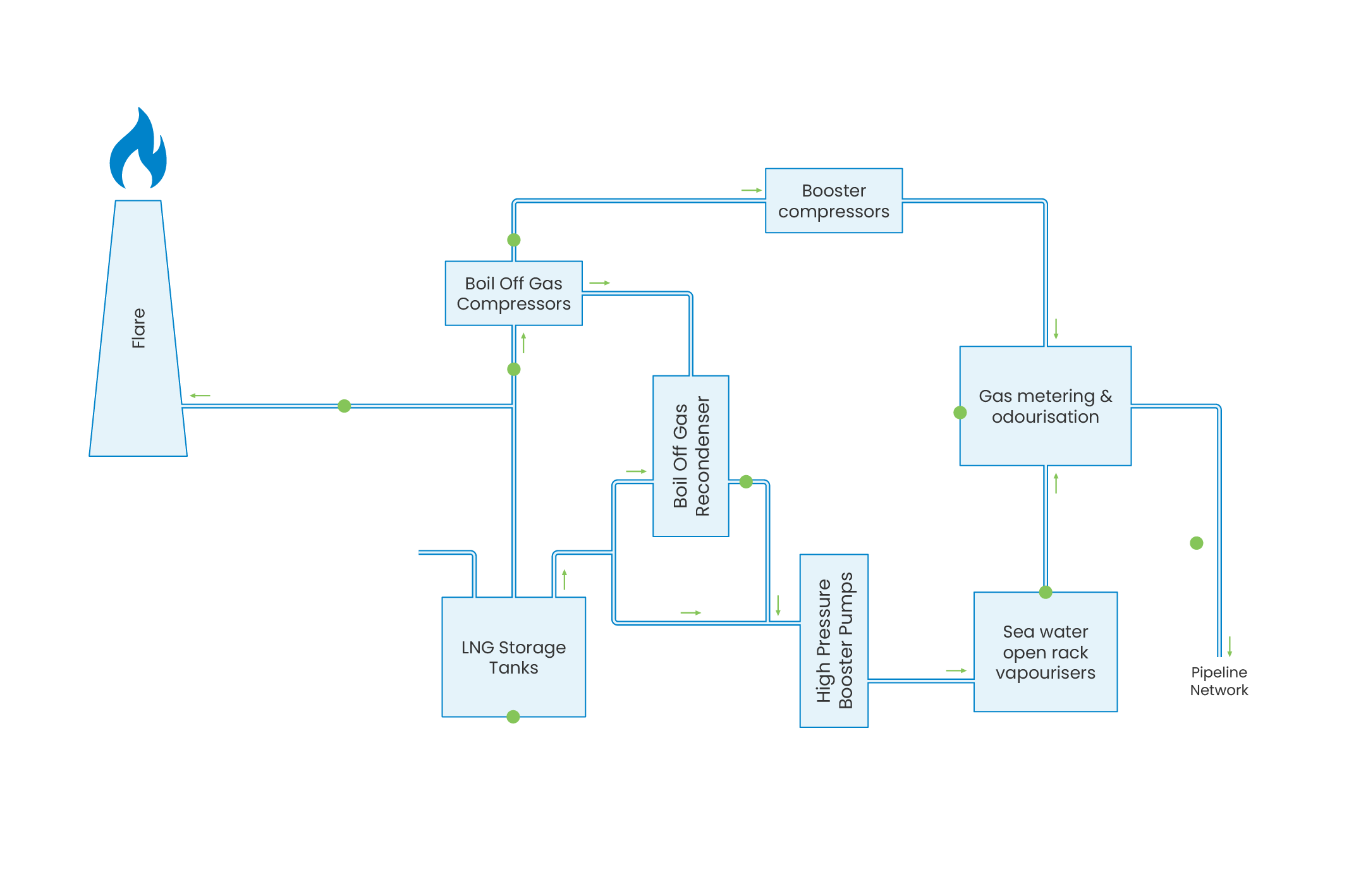
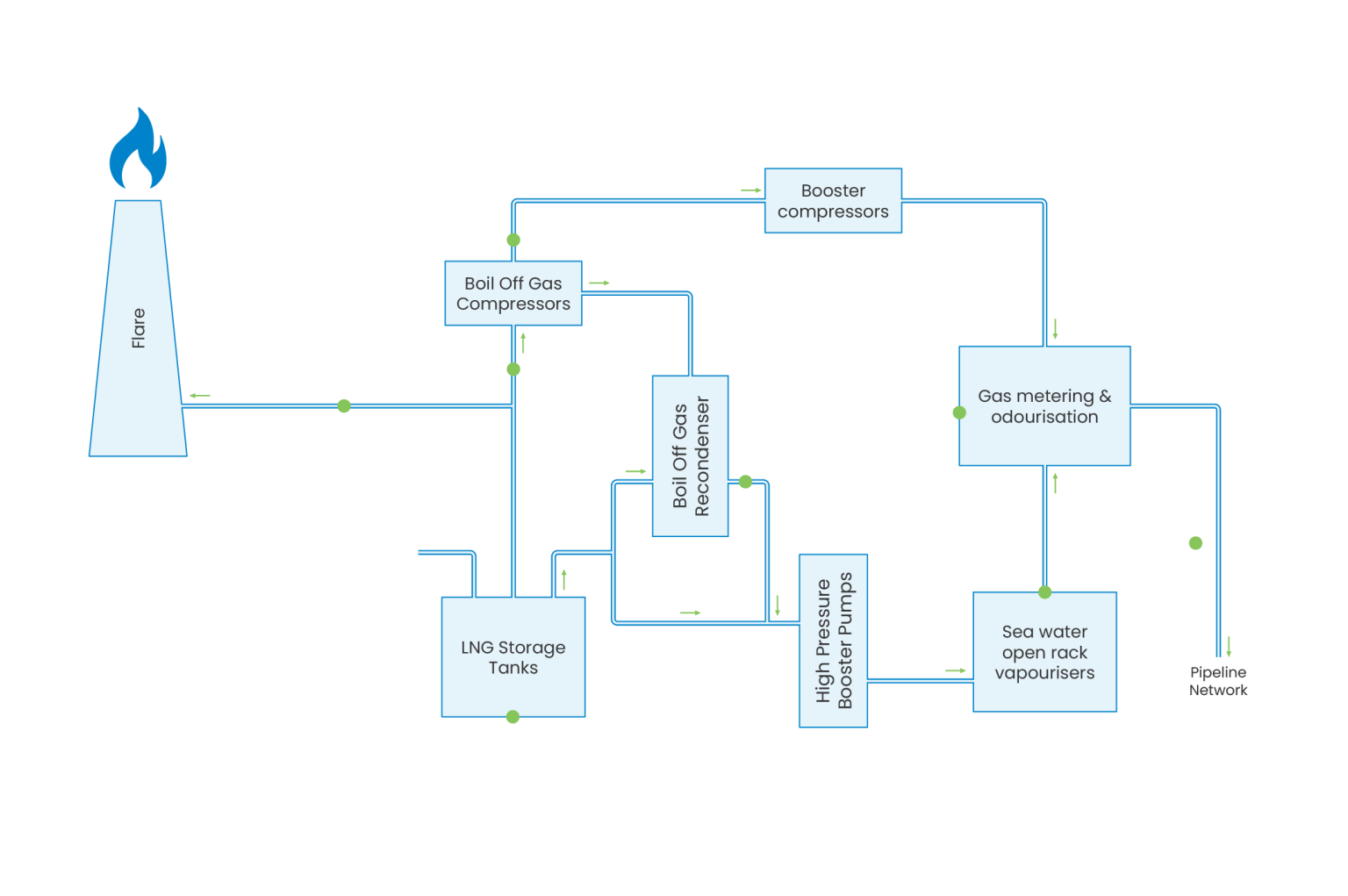
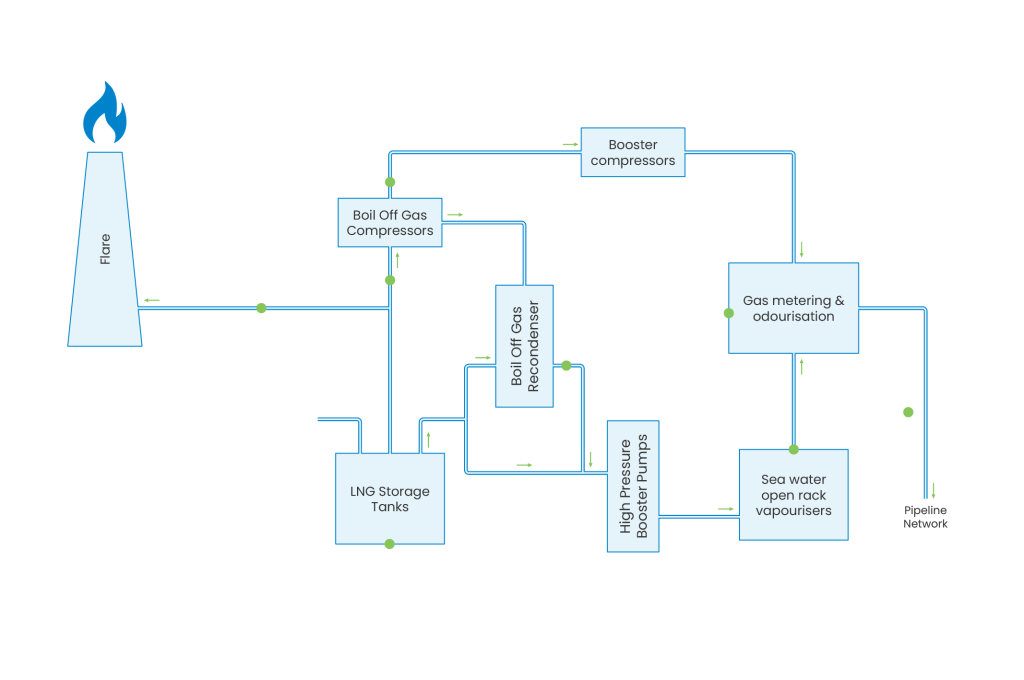
Liquefied natural gas is stored in cryogenic storage tanks designed to maintain extremely low temperatures and minimize heat ingress. During storage, a small portion of LNG naturally evaporates, forming boil-off gas (BOG). This vapour is collected and routed to boil-off gas compressors, where it is compressed and either sent to a recondenser to be converted back into liquid LNG or directed for use as fuel or safe disposal via the flare system. LNG required for pipeline delivery is withdrawn from the storage tanks and pressurized using high-pressure booster pumps before entering vaporizers, where it is heated typically using seawater or ambient heat and converted back into gaseous form. The regasified natural gas is then conditioned and sent to the gas metering and odorisation system, ensuring accurate custody transfer measurement and compliance with distribution requirements.
Recovered boil-off gas that is recondensed is returned to the LNG storage tanks, improving overall plant efficiency and minimizing product losses. This integrated arrangement of storage, vapour management, and regasification provides stable LNG inventory control and reliable gas supply to the downstream pipeline network.
top
Inactive
Tailored analytical solutions
for Southeast Asia’s industries.
Inactive
Solving analytical challenges
in every industry,
every day.