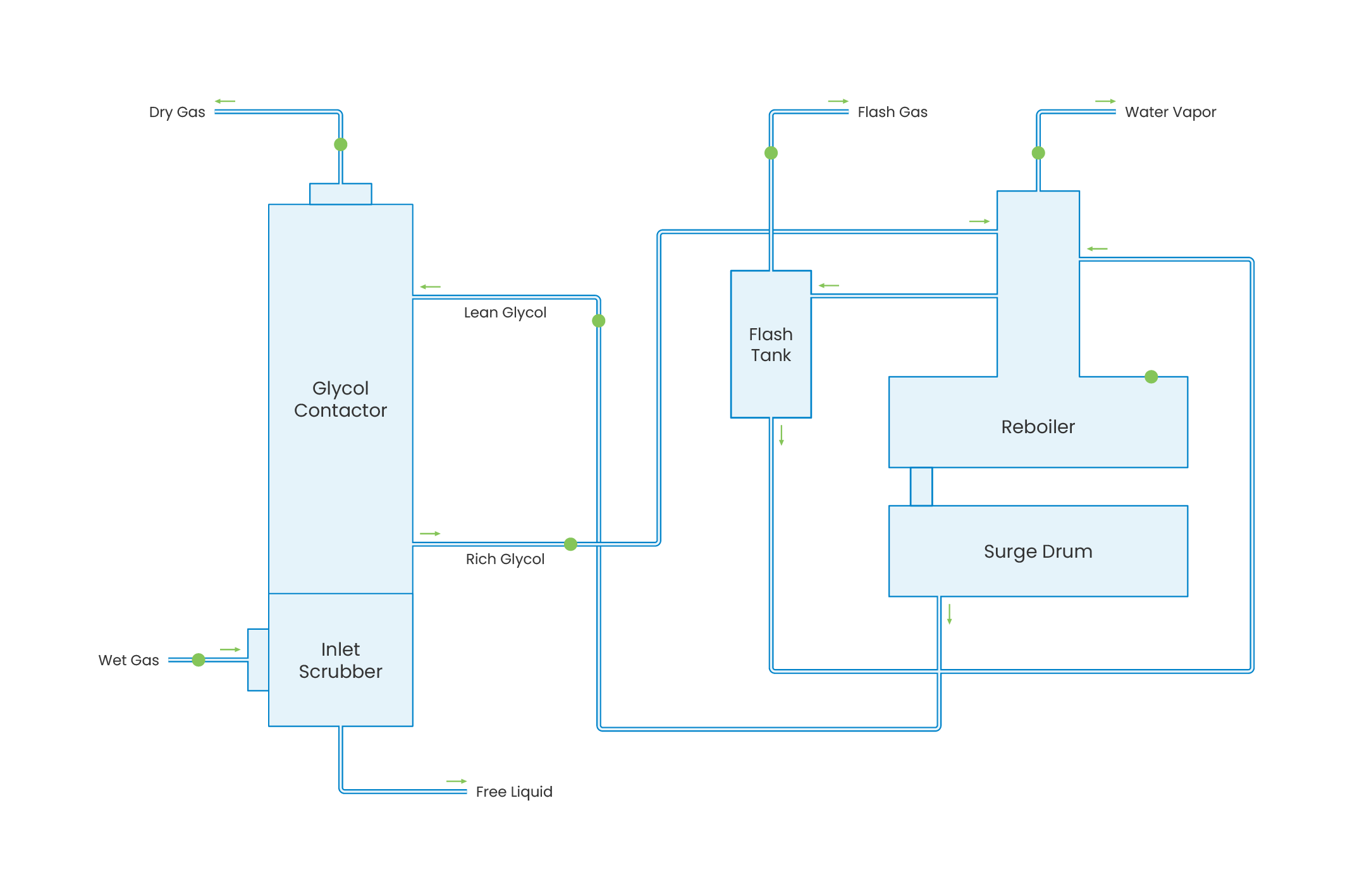
The Dehydration Unit is a critical gas conditioning process in midstream and gas processing facilities, designed to remove water vapor from natural gas to meet pipeline and downstream process specifications. Wet gas enters the glycol contactor, where it flows counter-currently against lean glycol, allowing water vapor to be absorbed from the gas stream. The resulting dry gas is routed to downstream units or export pipelines, while the rich glycol is regenerated through a series of heating and separation steps including flash tank, still column, and reboiler. The regenerated lean glycol is cooled and recycled back to the contactor. Effective dehydration prevents hydrate formation, corrosion, and liquid dropout, ensuring safe gas transportation and reliable operation of downstream units such as LNG, NGL recovery, and cryogenic processes.
top
Inactive
Tailored analytical solutions
for Southeast Asia’s industries.
Inactive
Solving analytical challenges
in every industry,
every day.