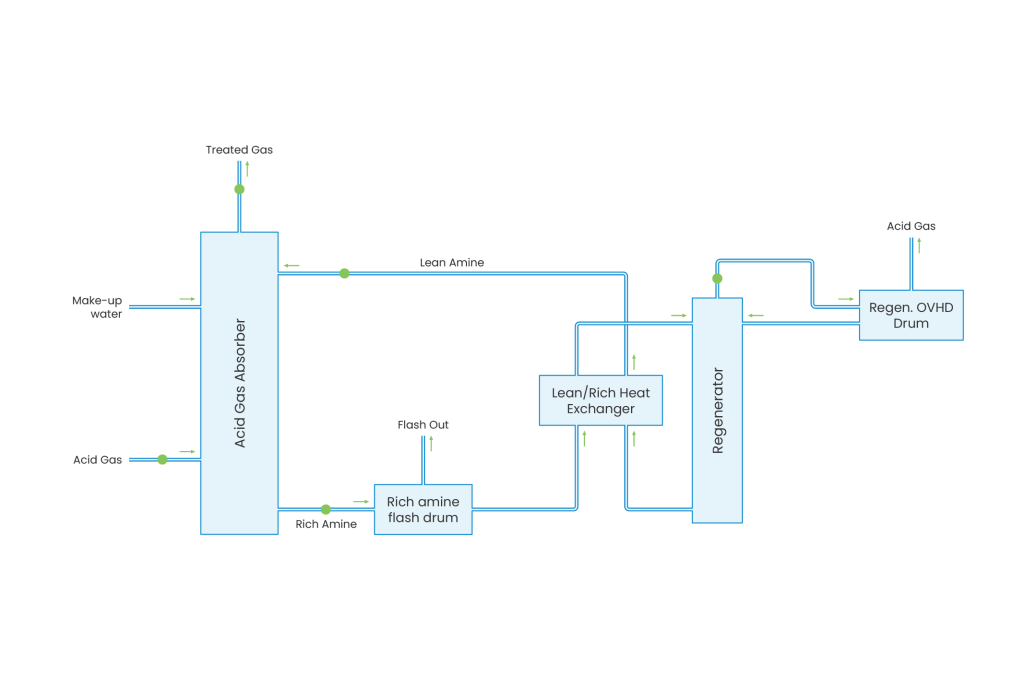
The Sweetening Unit is used to remove sulfur-containing compounds such as hydrogen sulfide (H₂S), mercaptans (R–SH), and other acidic impurities from gas or liquid hydrocarbon streams to meet product quality and safety specifications. In a typical amine-based sweetening process, sour gas or liquid hydrocarbons are contacted with lean amine in an absorber, where sulfur compounds are selectively absorbed. The treated (sweet) product is routed to downstream processing or export, while the rich amine is regenerated through heating and separation, releasing acid gases for sulfur recovery or disposal. Effective sweetening improves product quality, reduces corrosion, ensures environmental compliance, and protects downstream equipment and catalysts.
top
Inactive
Tailored analytical solutions
for Southeast Asia’s industries.
Inactive
Solving analytical challenges
in every industry,
every day.